

The transition to electric road freight is accelerating, but the big question remains: how will we charge it all?
According to the AECOM report Electrifying Road Freight – Pathways to Transition, commissioned by ARENA, electrifying the sector will add 11.5–16 terawatt-hours (TWh) of demand to the grid by 2040 — depending on uptake. That’s a massive new load on Australia’s energy system. But it’s not just about generating power. The challenge is getting electricity to where it’s needed, when it’s needed, and at the right scale.
This article breaks down what it will take to power the freight task — and what fleet managers, infrastructure providers and policymakers need to do over the next decade to be ready.
Charging Needs Vary by Freight Use Case
The AECOM report defines three core use cases for road freight:
- Urban Freight – Short-range, high-density trips (e.g. last-mile delivery)
- Intrastate Freight – Regional journeys within a single state
- Interstate Freight – Long-haul freight between major capitals and hubs
Each use case has different charging requirements based on trip length, vehicle type, operating model and access to infrastructure.
1. Urban Freight: Depot Charging Dominates
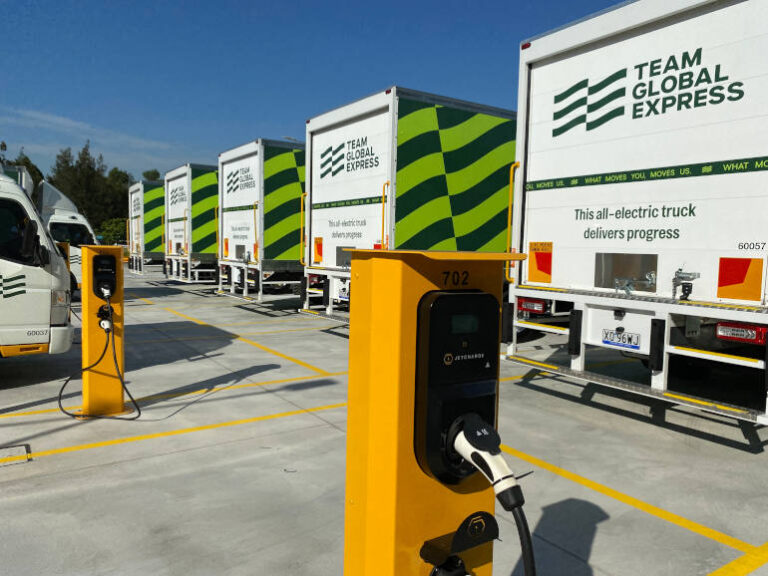
Urban freight, which includes light commercial vehicles like vans and utes, is best suited to overnight depot charging. Vehicles typically return to base daily, making it possible to charge at low speeds (e.g. AC 7kW–22kW) using off-peak electricity.
Key Considerations:
- Many small operators lack a depot. Shared charging hubs in urban freight zones will be critical.
- Workplace charging may also play a role for ‘gig economy’ and subcontracted drivers.
- Urban power networks can face constraints. Planning is needed to prevent bottlenecks.
2. Intrastate Freight: A Hybrid Approach
Intrastate freight often involves rigid and medium-duty trucks travelling 200–800km. These vehicles will likely charge at both depots and customer sites, supplemented by on-road DC fast charging.
Key Considerations:
- Flexibility is key. Charging may need to occur at depots, destination warehouses or rest stops.
- Public chargers must accommodate larger vehicles with adequate turning space and parking.
- Faster DC charging (150–350kW) will be needed to reduce downtime on regional trips.
3. Interstate Freight: Megawatt Charging is Essential
The interstate freight task is the most energy-intensive. Articulated trucks often travel over 1,000km in a single trip. The report confirms that megawatt charging systems (MCS) — capable of delivering 1 MW or more — will be required for fast top-ups along highway corridors.
Key Considerations:
- Ultra-fast hubs must be spaced ≤600km apart to match top-end BEV truck range.
- Charging must align with fatigue breaks and include driver amenities.
- Infrastructure upgrades at highway rest stops will require major investment and coordination.
Grid Capacity vs. Grid Access
AECOM’s modelling shows that electricity generation will not be the limiting factor. Even in the high uptake scenario (16 TWh annually), national energy forecasts suggest Australia can meet the demand with planned renewable projects.
The bigger challenge is electricity distribution and transmission — getting high-capacity electricity to depots, rest stops and regional hubs.
“Aligning transmission and distribution networks to ensure power reaches where it is most needed is likely to be the primary future challenge.” – AECOM, 2024
Location Matters
AECOM categorises potential freight charging hubs by proximity to existing infrastructure:
| Location Type | Key Characteristics | Challenges |
|---|---|---|
| Urban | Near substations and grid access | Limited space, older networks may need upgrades |
| Regional | Moderate access | May need substation upgrades and new lines |
| Remote | Far from infrastructure | Expensive and complex to connect |
| Isolated | Off-grid entirely | Must rely on solar, wind and batteries |
Supporting Infrastructure for Charging Hubs
To make electric freight charging viable, especially in non-urban areas, sites will need more than just power:
- High-voltage grid connections (or renewables + BESS for isolated sites)
- Large vehicle access and parking for trucks with trailers
- Driver facilities – restrooms, food, fatigue rest areas
- Smart load management systems to balance demand and reduce peak loads
Who Will Build the Charging Network?
AECOM outlines a staged rollout of 165 freight charging hubs across the country. But to build them, we need:
- Government investment – particularly for non-commercial locations
- Policy clarity – around design standards, access, and energy tariffs
- Private sector partnerships – involving energy providers, fleets and site operators
- Cooperation with DNSPs – to upgrade local grids and manage demand
Planning for Peak Demand
Electric freight vehicles can charge slowly overnight — or rapidly at peak times. Understanding when and where charging occurs is crucial for grid planning.
Strategies to reduce peak impact include:
- Depot charging during off-peak hours
- Battery storage systems (BESS) at key sites
- On-site solar generation to offset grid load
- Smart scheduling and load balancing
Charging Freight Means Rethinking Freight
Electrifying freight isn’t just a vehicle transition — it’s a total rethink of energy logistics. Charging can’t happen “whenever it’s convenient.” It must be planned, predictable, and integrated into operations.
For fleets, that means asking:
- Can we change route structures to accommodate charging?
- Are our depots ready for electrification?
- What will it cost to upgrade our sites or lease new ones?
- Should we collaborate with other operators to share infrastructure?
Conclusion: Now Is the Time to Start Charging Forward
The energy to electrify Australia’s road freight future exists — but getting it to the right place at the right time will take proactive planning and smart investment.
If your organisation operates trucks or supports the freight sector, now is the time to:
- Map your vehicle tasks and route profiles
- Assess depot readiness and grid access
- Talk to your DNSP or landlord about upgrade timelines
- Advocate for local and federal policy support
- Explore partnerships to share infrastructure