

One of the most common misconceptions about electric vehicles in fleets is that public charging creates downtime and costs businesses productivity. In reality, when planned and integrated effectively, public charging can fit seamlessly into a driver’s workday – and in many cases, it’s more efficient than people expect.
“The biggest concern Fleet Managers have is drivers waiting to charge on company time,” acknowledges Ben Savigny, Head of Channel Partnerships at Evie Networks. “That’s why our entire network is fast charging only – the strategy had fleets in mind who need to keep vehicles in service. Time is money, and slow charging is ineffective for commercial operations in a public charging setting.”
Fast Charging Keeps Fleets Moving
Evie’s network is built exclusively around fast charging, designed specifically for the needs of business operators. This means drivers can add meaningful range in a short stop – often the same amount of time it takes for a scheduled break, a coffee, or a meeting.
With network availability running at 96–97%, fleets can also rely on chargers being operational when they arrive. Real-time status updates in the Evie app let drivers see whether a charger is available before heading to a location, eliminating wasted trips and unexpected delays.
Turning Charging Into “Invisible” Time
The real trick to making public charging work for fleets is integration. Instead of thinking about charging as a separate task, forward-thinking fleet managers are encouraging drivers to see it as something that happens naturally during the workday.
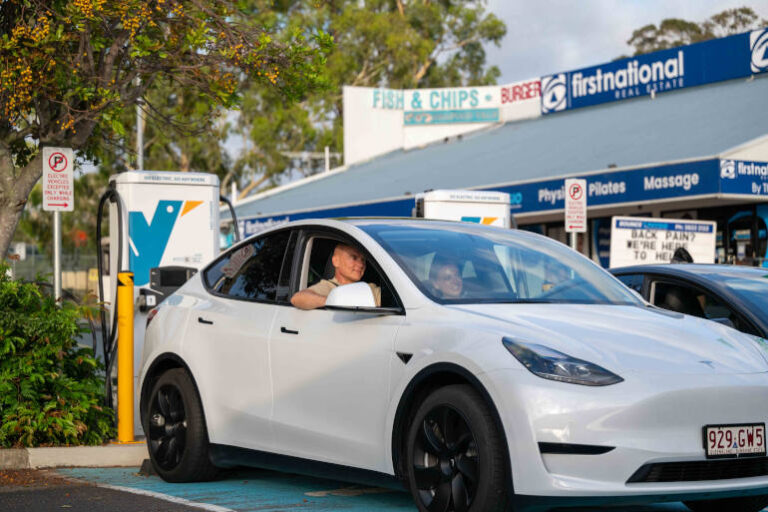
“The goal isn’t to add charging to a driver’s day – it’s to make charging invisible within their existing routine,” explains Savigny. “When drivers can charge at the shopping centre they’re already visiting or the business park where they have meetings, it stops being a separate task and becomes opportunistic.”
This approach flips the narrative. Instead of downtime, charging becomes “background time” – the car is charging while the driver is working, meeting a client, or grabbing lunch. By the time they return, the vehicle is ready for the next destination.
Data-Driven Efficiency
For fleet managers, Evie’s reporting tools provide valuable insights into how drivers are using the network. Near real-time visibility means managers can spot patterns, identify the most efficient charging locations, and guide drivers to the best strategies for their specific routes.
This data helps fleets continuously optimise operations, proving that public charging can actually support productivity rather than hinder it.
Charging Without Disruption
Because Evie’s chargers are fast and strategically placed near business destinations, drivers don’t need to build charging into their day – they simply fit it around existing tasks. For sales teams, this might mean plugging in during a client meeting. For service technicians, it might be during a lunch break near a job site. The point is that charging doesn’t disrupt the workflow; it complements it.
A Myth Put to Rest
The fear of lost productivity has long been a stumbling block for fleets considering EVs. But as more organisations adopt electric vehicles, the evidence shows that public charging, far from being a burden, is a flexible and efficient solution.
With the right mix of fast chargers, real-time visibility, and smart scheduling, fleets can keep vehicles moving, drivers productive, and operations seamless.
As Savigny sums it up: “The most efficient approach treats charging as an opportunistic activity rather than a scheduled obligation. That’s the key to making it work for fleets.”
Ready to get started with public charging?
Evie’s Charge Cards make it simple to begin your fleet’s electrification journey without productivity concerns. With fast charging that fits into existing routines and fuel card-style simplicity, you can prove to yourself that public charging enhances operations rather than disrupting them. [Start with Evie’s Charge Cards →]
- New Navara: Big Grunt, Now with a Plug
 Nissan will bring a plug-in hybrid Navara to Australia in 2027, giving fleet buyers another electrified option for work that demands towing capacity, payload and four-wheel-drive capability. The all-new Navara Pro PHEV will be Nissan’s first plug-in hybrid model in Australia and its first electrified ute globally. Australia and New Zealand will become the first
 - Could concrete agitators be an EV sweet spot?Concrete agitators could become one of the more practical early applications for electric heavy trucks, with short operating distances, significant idle time and high fuel use creating a duty cycle that may suit battery-electric technology. Speaking with Fleet News Group at Everything Electric in Sydney, Brenton Sweeney, Sales Executive Commercial Vehicles and Equipment at Prancer
- BYD ATTO 2 DM-i Plugs into Fleet DemandBYD’s ATTO 2 DM-i offers fleet buyers a compact plug-in hybrid SUV with up to 90 kilometres of claimed electric driving range, creating an option for organisations looking to electrify daily journeys while retaining petrol capability for longer trips. The five-seat, front-wheel-drive SUV comes in Essential and Premium variants, with different battery capacities and electric
- FREELANDER Takes on the Luxury SUV MarketFREELANDER will launch in Australia and New Zealand in 2027, bringing a new premium SUV brand developed by Chery and Jaguar Land Rover (JLR) into the local market. The FREELANDER 8 will lead the Australian launch, combining JLR-led British design with Chery’s electrified vehicle technology. Australian specifications, pricing and the detailed launch schedule will be
- First e VITARA Delivery Launches Suzuki’s Electric EraSuzuki Australia has delivered its first battery electric vehicle to an Australian customer, marking the start of local customer deliveries for the e VITARA and adding another option for fleets considering electric SUVs. The first vehicle, an e VITARA Motion, was collected by existing Vitara owner Nel Mary Davis from Pennant Hills Suzuki in early