

Electrification dominates today’s fleet agenda. Policy settings, emissions targets, charging infrastructure and new model releases continue to reshape the landscape. But while EVs are changing the conversation, they are not, in themselves, a measure of fleet management maturity.
Maturity is less about the powertrain in the driveway and more about the quality of information guiding decisions.
According to Shaun Janks, Co-Founder and Chief DingGo at DingGo, many fleets are accelerating into EV strategy without first establishing a clear understanding of their current data.
“We’re seeing fleets move quickly into electrification planning without having a complete picture of their existing performance, cost and risk data,” Janks says. “It’s understandable given the pressure around emissions, but without strong baseline information, decisions become assumptions rather than analysis.”
Fleet maturity is often mistaken for size, sustainability ambition or technology adoption. In reality, Janks argues, it is defined by how well a fleet understands itself — how vehicles are used, what they truly cost across their lifecycle, where risks sit and how effectively information flows across the organisation.
“Fleet maturity is about visibility,” he explains. “If you can’t see how your vehicles are performing today, it’s very hard to plan confidently for tomorrow.”
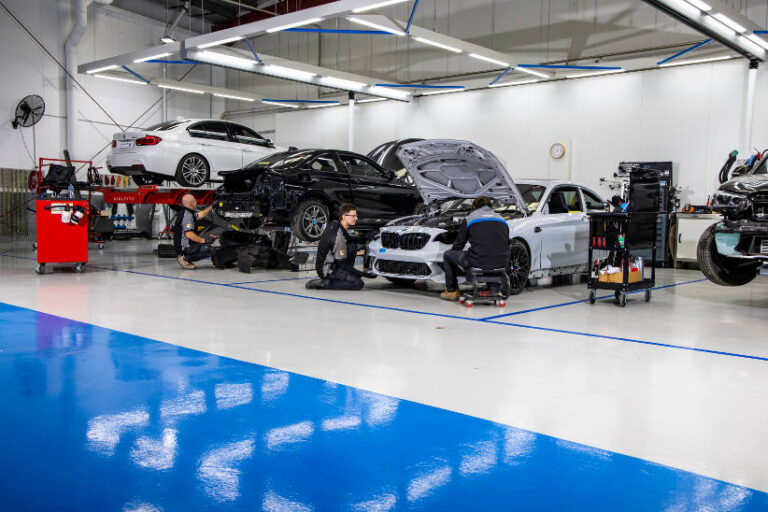
One of the weakest points in many fleets is accident and repair data. While insured claims are usually tracked, minor incidents, uninsured damage and deferred repairs frequently fall outside structured reporting.
“If you’re only analysing insured claims, you’re only seeing part of the story,” Janks says. “A significant portion of cost and operational risk sits outside the insurance policy, and that’s often where visibility drops away.”
This lack of clarity affects everything from whole-of-life cost modelling to vehicle selection and operational risk management. Those gaps become more pronounced when fleets attempt to model the impact of EV adoption.
“Electric vehicles introduce different repair pathways, parts availability considerations and downtime factors,” Janks says. “If you don’t understand your current baseline — how often vehicles are damaged, how long they’re off the road, what repairs really cost — it’s difficult to model how a change in powertrain will affect your operation.”
For Janks, mature fleets treat electrification as an extension of disciplined fleet management fundamentals rather than a standalone objective.
“The question isn’t simply ‘Should we buy EVs?’” he says. “It’s ‘How do different vehicles perform over their full lifecycle, and what does that mean for cost, safety and risk?’ That’s a data question before it’s a powertrain question.”
Information maturity also strengthens internal alignment. In less mature organisations, fleet, insurance, procurement and finance often operate independently, each with partial insight. In more mature fleets, shared data connects these functions.
“When everyone is working from the same information set, conversations shift,” Janks says. “Procurement can see repair trends, insurance can see total incident exposure, and fleet can connect operational behaviour to financial outcomes.”
This integrated view is increasingly important as fleets face higher vehicle prices, budget constraints and stronger governance expectations. Executive teams are demanding evidence-based decision-making, not high-level summaries.
Another marker of maturity is how fleets handle minor incidents. Less mature fleets often ignore small events if vehicles remain operational. More mature fleets record every incident, regardless of immediate repair action.
“Recording an incident isn’t about assigning blame,” Janks says. “It’s about building a reliable dataset. Once you have visibility, you can make informed decisions about cost, risk and timing.”
Digitisation supports this shift but does not guarantee it.
“Technology enables maturity, but it doesn’t create it,” Janks says. “Maturity comes from how consistently organisations capture, share and act on information.”
As electrification continues to reshape the industry, Janks maintains that the fleets best positioned to succeed will be those that prioritise information discipline.
“EVs are clearly part of the future,” he says. “But fleet maturity isn’t defined by what’s parked in the yard. It’s defined by what’s in your data — and how well you use it.”
For fleet leaders planning their next strategic move, the message is measured but direct: before focusing solely on new technology, ensure the fundamentals of visibility, data integrity and organisational alignment are firmly established.
- EVs are turning employees’ homes into fleet fuel stations
 For decades, fleet fuel management has been relatively straightforward. Give the driver a fuel card, let them visit a service station and receive an invoice detailing the transaction. Electric vehicles are changing that model because the organisation can suddenly be responsible for procuring the energy used to power its fleet — and some of that
 - Foton and Ampol Target Electric Truck ChargingFoton Mobility Distribution (FMD) and Ampol have signed a Memorandum of Understanding to explore charging solutions for electric truck fleets, with a focus on helping operators charge at depots, commercial hubs and public charging sites. The collaboration will investigate charging options across Ampol’s AmpCharge public network and private facilities for FMD’s fleet, logistics and business
- Ausgrid’s charging strategy goes well beyond the depotInstalling chargers at the depot might be the obvious starting point for fleet electrification. For Ausgrid, it wasn’t going to be enough. As the electricity network continues electrifying passenger vehicles, vans and trucks, it has developed a charging strategy designed around how employees actually use fleet vehicles. Speaking during the Fleet News Group Awards finalists
- Home Charging Enters a New Growth PhaseEvnex has passed 20,000 connected charger installations across Australia and New Zealand, with rapid growth reflecting the shift of home EV charging from an early-adopter product to mainstream infrastructure. The Christchurch-based manufacturer shipped its first charger in 2017. While reaching the first 10,000 installations took eight years, the next 10,000 were added in just nine
- Ampol’s $225 million Evie deal puts a new value on public EV chargingAmpol’s proposed $225 million acquisition of Evie Networks could prove to be a significant milestone for Australia’s EV charging sector, putting a substantial transaction value on a public charging network that was built well before electric vehicles became a mainstream consideration for Australian fleets. Ampol Energy has entered into an agreement to acquire 100% of