


MG Motor Australia says it is taking a more disciplined approach to pricing as it seeks to rebuild confidence among fleet buyers assessing electric vehicle residual values and whole-of-life costs.
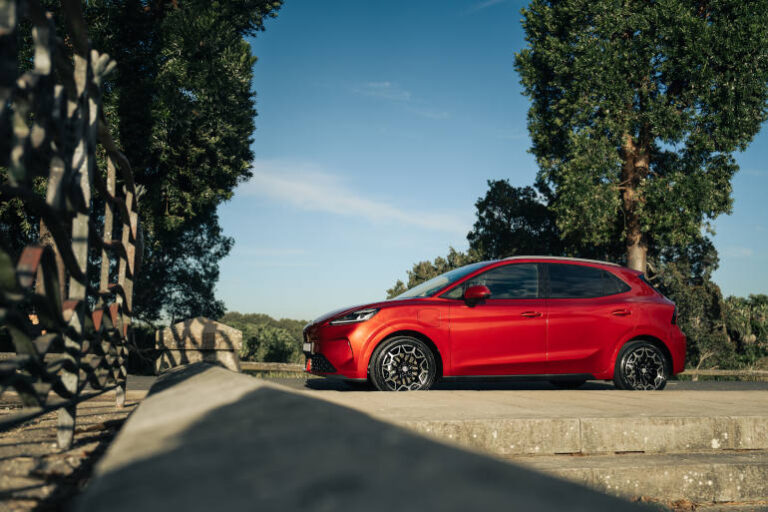
The issue is particularly relevant for fleets considering the MG4, which achieved broad take-up across government, corporate, small business and novated leasing markets but was also affected by significant price movements during its lifecycle.

National Fleet Manager Dane Henricksen said MG’s focus over the past year has been to provide buyers with more certainty when planning vehicle replacements and preparing tenders.
“Pricing stability has been absolutely number one for us,” Henricksen said. “We’ve had a really conscious effort since mid last year, July onwards, to have our pricing very, very stable, to not make any changes.”
Henricksen said that approach was important for fleet leasing companies, corporate buyers and government agencies, where vehicle selection decisions can be made months before vehicles are delivered.
“Government corporate buyers that they’re running through a tender process, for example, now, or they’re looking to select a vehicle, can be comfortable and confident that that price will be the same on that vehicle in three months, six months, nine months, 12 months’ time,” he said.
For fleets, stable acquisition pricing supports more accurate whole-of-life cost calculations and reduces the uncertainty around residual values that can affect lease rentals and vehicle replacement budgets.
Henricksen, who spent more than two decades in fleet leasing before joining MG, said the brand understood the concern from fleet management organisations carrying residual-value exposure across larger vehicle orders.
“If they’re buying 100 or 500 of those cars or 1,000 of those vehicles, they’re not going to be left exposed in terms of any RV risks on those vehicles,” he said.
MG Product Planning Manager Kevin Kou said the current MG4 range had been priced to reflect a more competitive EV market, while adding further equipment and technical changes.
“As you would know, the MG4 64 Essence, that was around $48,000 when it first launched, and today you can purchase the new MG4 64 Essence for $39,990 drive-away,” Kou said.
“That’s a reflection of all the competition that’s in the market, and also our revised re-engineering of the product.”
Kou said the updated MG4 includes a new interior and infotainment system, an LFP battery replacing the previous NCM unit, a heat pump and a claimed WLTP range increase to 452km.
MG is also using a two-model strategy with the MG4 EV Urban positioned as the more affordable and practical option. Kou said the Urban’s larger dimensions, roof racks and rear storage capacity could make it suitable for fleet applications where space and usability matter more than performance-oriented features.
“The key messages for that is affordability and convenience and practicality,” Kou said. “The MG4 EV Urban’s really a bigger, taller, longer, wider car, and its focus is space and convenience.”
Henricksen said MG’s intention is to maintain the pricing approach over the longer term, rather than rely on sharp discounts to stimulate demand.
“Back then, that’s what we were intending to do. Proof of that was going to be in the delivery,” he said. “The intention is to continue that long term in the marketplace.”
For fleet buyers, the message is that MG wants to shift the conversation from headline EV pricing to predictable ownership costs. The longer-term test will be whether stable pricing, service support and used-vehicle performance combine to give leasing companies and fleet operators confidence in residual values.