


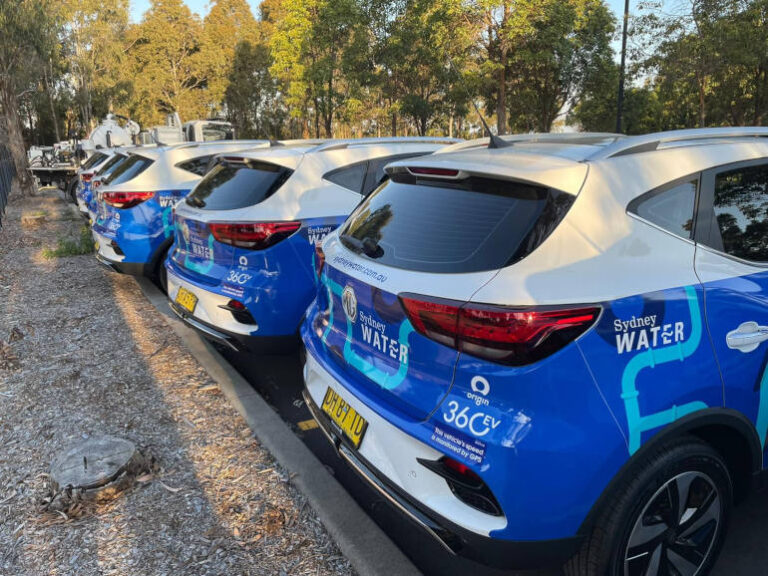
For many organisations, the first question about fleet electrification is: what chargers do we need?
The better question is: how much energy will the fleet need, when will it need it, and how long will the vehicles be parked?
Charging infrastructure should not be planned in isolation from the fleet. The right mix of AC and DC chargers depends on the kilometres travelled each day, the energy consumption of each vehicle type, the time available to charge, and the growth profile of the fleet over the next five to ten years.
For Fleet Managers, Sustainability Managers and Finance Managers, this means the charging conversation needs to start with data.
AC and DC charging: what is the difference?
Electric vehicles store energy in a battery as direct current, or DC. The electricity grid supplies alternating current, or AC.
With AC charging, the charger supplies AC power to the vehicle, and the vehicle’s onboard charger converts it to DC before it reaches the battery. This means the charging speed is limited by the vehicle’s onboard charger, not just the charger on the wall.
With DC charging, the conversion from AC to DC happens inside the charging equipment. DC power is then delivered directly to the vehicle battery, allowing much higher charging speeds.
In practical fleet terms, AC charging is generally suited to vehicles that return to base and sit parked for several hours, especially overnight. DC charging is better suited to vehicles with shorter dwell times, higher daily kilometres, larger batteries, or operational requirements that need quick turnaround charging during the day.
AC charging is often the starting point
For many light vehicle fleets, AC charging will do most of the work.
If a vehicle returns to the depot at 5pm and does not leave again until 7am, it has around 14 hours of dwell time. In this situation, a lower powered AC charger may be enough to replace the energy used during the day.
This is important because faster is not always better. Installing more DC chargers than required can increase capital cost, grid connection requirements and demand charges. For vehicles that sit parked overnight, slower managed charging can often deliver the required operational outcome at a lower total cost.
AC charging can also be easier to deploy in stages. A fleet may begin with a small number of chargers for the first electric vehicles, then expand the charging footprint as more vehicles are replaced through the capital program.
DC charging supports higher utilisation
DC charging becomes more important when vehicles have higher daily energy demand, limited dwell time, or more intensive operating cycles.
This may include pool vehicles used across multiple shifts, light commercial vehicles that travel long distances, trucks with larger batteries, or assets that cannot remain off the road for long periods.
DC charging may also be required where the fleet has an operational need for opportunity charging. For example, a vehicle may return to the depot during the day for loading, cleaning, crew changeover or lunch breaks. A short DC charging session during this period can add enough energy to complete the next shift.
However, DC charging should be planned carefully. It is not just a vehicle decision. It is also an electrical infrastructure decision. Higher powered chargers can require upgrades to switchboards, transformers, grid connections and site energy management systems.
Start with kilometres, then convert to energy
The most useful planning metric is not the number of vehicles. It is the amount of energy the fleet needs each day.
To work this out, organisations need to understand how many kilometres each asset travels in a typical day, a high-use day, and during peak operating periods. This can be done using telematics, fuel card data, odometer readings, job allocation records or driver logs.
Once the daily kilometres are understood, they can be converted into daily energy demand using an estimated energy consumption rate for each vehicle type.
As a simple guide:
| Vehicle type | Example energy use | Daily distance | Estimated daily energy required |
|---|---|---|---|
| Small car | 15 kWh per 100 km | 100 km | 15 kWh |
| Large SUV | 20 kWh per 100 km | 100 km | 20 kWh |
| Truck | 40 kWh per 100 km | 100 km | 40 kWh |
This approach helps move the discussion away from opinions about charger speed and towards the operational requirement.
For example, if a small electric car travels 80 kilometres per day and uses 15 kWh per 100 kilometres, it will need around 12 kWh returned to the battery each day. If it is parked for 14 hours overnight, this is a very different charging task to a truck that travels 250 kilometres per day and uses 40 kWh per 100 kilometres, requiring around 100 kWh of energy.
Dwell time determines charger type and quantity
After daily energy demand is calculated, the next question is dwell time.
Dwell time is the period when the vehicle is parked and available to charge. For many depot-based fleets, this may be from 5pm to 7am. For some operational fleets, it may be shorter, irregular or split across several locations.
The relationship is simple: the less time available to charge, the more charging power is needed.
A vehicle that needs 20 kWh overnight may be easily supported by AC charging. A vehicle that needs 100 kWh and is only parked for a few hours may require DC charging. A vehicle that returns to base overnight but has a large battery and high daily utilisation may need either higher powered AC, lower powered DC, or a combination of both.
This is why charger planning should be based on use cases, not averages alone. Two vehicles may look the same on the asset register but have very different operating profiles.
Plan for the 10-year replacement program
The first electric vehicles are rarely the problem. The infrastructure challenge usually appears when the organisation moves from a trial to a larger rollout.
A fleet may start with two or three electric vehicles and a small number of AC chargers. But if the 10-year replacement plan shows that 30, 50 or 100 vehicles are likely to be electric, the site energy requirement changes significantly.
This is where fleet planning, asset management and electrical planning need to come together.
The fleet replacement plan should identify which vehicles are likely to be replaced with battery electric, plug-in hybrid, hybrid or low-emission alternatives. Each future electric vehicle should then be assigned an estimated daily energy requirement. This creates a forward view of depot energy demand.
That demand can then be staged over time. Instead of overbuilding from day one, organisations can plan the electrical backbone, switchboard capacity, conduits, cable pathways and charger locations with future growth in mind.
Smart charging reduces infrastructure pressure
Not every vehicle needs to start charging as soon as it plugs in.
Smart charging systems can manage when vehicles charge, how much power each charger receives, and which vehicles are prioritised. This can help avoid unnecessary peaks in demand and reduce the need for oversized electrical infrastructure.
For example, if ten vehicles are plugged in at 5pm but do not need to leave until 7am, they may not all need to charge at full power at the same time. A charging management system can stagger charging across the night while still making sure the vehicles are ready for the morning shift.
This becomes increasingly important as more vehicles are added to the fleet and as organisations look to integrate solar, batteries and energy tariffs into the charging strategy.
Public charging still has a role
Depot charging will usually be the foundation for predictable fleet operations. However, public charging may still play a role.
It can support vehicles that travel beyond their normal route, staff who take vehicles home, regional trips, emergency use, or fleets that do not yet have enough depot charging capacity.
The risk is relying on public charging as the primary operating model without understanding availability, access, pricing, queuing, payment systems and driver behaviour. Public charging should be treated as part of the operating plan, not as a substitute for fleet energy planning.
The practical planning sequence
A useful fleet charging plan should answer the following questions:
- Which vehicles are suitable for electrification over the next 10 years?
- How many kilometres does each vehicle travel per day?
- What is the estimated energy use for each asset type?
- How much energy must be replaced each day?
- When and where are the vehicles parked?
- How long is each vehicle available to charge?
- Which vehicles can use AC charging?
- Which vehicles need DC charging?
- What electrical capacity is available at the site?
- How will future fleet growth be staged?
This approach gives organisations a better foundation for investment decisions. It also helps avoid two common mistakes: installing chargers before understanding operational demand, or underestimating the electrical infrastructure required as the fleet grows.
Charging is a fleet management decision
The transition to electric vehicles is not just about buying new vehicles or installing chargers. It requires a more mature approach to fleet management.
Organisations need better data on utilisation, kilometres travelled, operating hours, replacement timing and asset suitability. Without this information, charger planning becomes guesswork.
By starting with daily kilometres, converting that into energy demand, and matching it against dwell time, fleets can make more informed decisions about the type and quantity of chargers they need.
For many organisations, the best charging solution will be a mix of AC and DC charging, supported by smart charging and staged investment. The goal is not to install the fastest chargers possible. The goal is to make sure every vehicle has the energy it needs, when it needs it, at the lowest practical cost.