


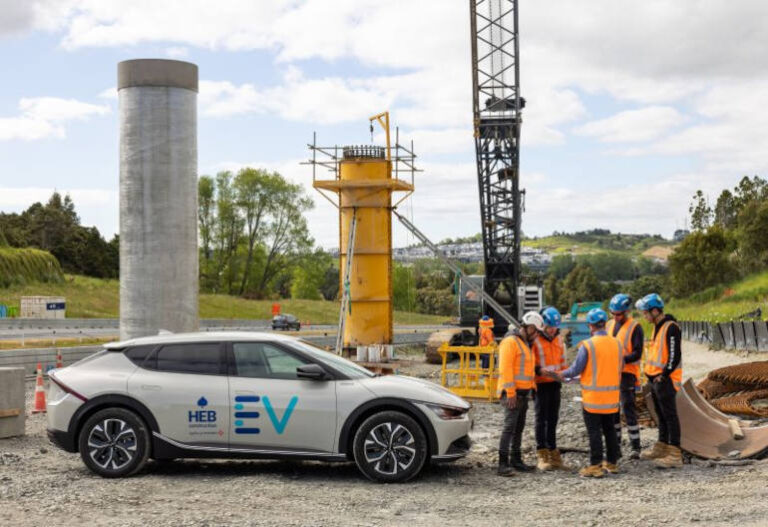
At the 2025 EROAD Fleet Day, Rebecca Wilson, Head of Business Energy Solutions at Z Energy, delivered a practical and motivating presentation for fleet managers tackling the challenge of electrification. Drawing on real-world experience, she shared two case studies—HEB Construction and Honda New Zealand—that demonstrate how a well-planned and people-focused approach can make the transition to electric vehicles (EVs) smoother and more sustainable.
HEB Construction: Mapping a Strategy for a Complex, Mobile Fleet
HEB Construction operates a large, diverse fleet across New Zealand, often with a highly mobile workforce and complex operational demands. Rather than jumping into EV adoption, they developed a five-year transition plan with support from Z Energy. This strategic plan addressed:
- Emissions reduction goals
- Stakeholder alignment across departments and functions
- A capital investment roadmap
- Charging infrastructure requirements
- Workforce engagement and change management
Crucially, the plan was informed by real operational data. Initial assumptions suggested depot charging infrastructure would meet most needs. However, data analysis revealed that many drivers rarely returned to a depot. Without this insight, HEB risked over-investing in infrastructure that wouldn’t be used.
Instead, the infrastructure was matched to driver behaviour and route patterns, making the investment fit-for-purpose. As Wilson put it, “Understanding the data and how your fleet travels will actually save you money and time in the long run.”
HEB also committed heavily to change management, recognising that successful transition depends on bringing their people along for the ride. By aligning change initiatives with infrastructure rollout and future heavy fleet plans, they’re preparing their teams now for bigger transitions to come.
Honda New Zealand: Supporting Drivers and Customers on the EV Journey
While HEB’s focus was operational, Honda New Zealand approached electrification from both an internal and customer-facing perspective. As they prepared to launch their first EV—the Honda e:N1—they needed solutions that worked for their dealership network, internal operations, and loyal customers.
Their three-pillar approach included:
- Safe and Reliable Charging Infrastructure
Honda needed flexible charging solutions, especially for servicing at dealership sites. Off-the-shelf products didn’t meet Z Energy’s safety standards, so a custom solution was developed: a mobile DC charger built around a traditional wall-mounted unit. This innovation proved essential in adapting EV support to real-world conditions. - Customer Experience and Incentives
To ease the transition for customers, Honda created bundled offers that included both home and public charging options. They also launched a loyalty program with Z Energy—complete with small perks like free coffee or pies. As Wilson joked, “Let’s be honest, everyone loves a free pie and coffee, right?” - Education and Training
Honda acknowledged that their sales staff had decades of experience with petrol and diesel vehicles—but little knowledge of EVs. They invested in training programs for dealerships to ensure staff could confidently talk about and sell EVs, and guide customers through the transition.
Common Threads: What Every Fleet Manager Can Learn
Across both case studies, five key principles emerged:
- Plan for the short, medium, and long term
Whether you have five vehicles or 500, build a plan that fits your size and ambition. Don’t just think about where you’re starting—think about where you’re going. - Use data before making decisions
Track vehicle usage patterns before investing in infrastructure. It helps avoid costly mistakes and ensures assets are used efficiently. - Start small—but just start
Waiting for the perfect moment often means doing nothing. Start with easy wins and scale up from there. - Prioritise change management
People make or break the transition. Educate, incentivise, and involve your workforce so they can become ambassadors for the change. - Match charging solutions to real operational needs
Consider where your vehicles are, how long they stop, and what infrastructure is viable—whether that’s depot-based, home charging, or public networks.
Take Charger Maintenance Seriously
Wilson closed with one critical reminder—take up a support package for your EV infrastructure. “Chargers do break. What you want is someone to be able to fix them really quickly,” she said. Z Energy maintains a 96–98% uptime across its installations thanks to strong support arrangements.
And finally—ask about safety. As you become responsible for electric fuel assets on your site, knowing how your systems are assessed for safety and reliability becomes essential, especially as scale increases.
Fleet electrification isn’t just a tech upgrade—it’s a strategic, operational, and cultural transformation. The experiences of HEB Construction and Honda New Zealand prove that no matter your size or sector, success comes from data, planning, and putting people first.
If you’re starting your own journey, take Rebecca Wilson’s advice to heart: start small—but just start.




