


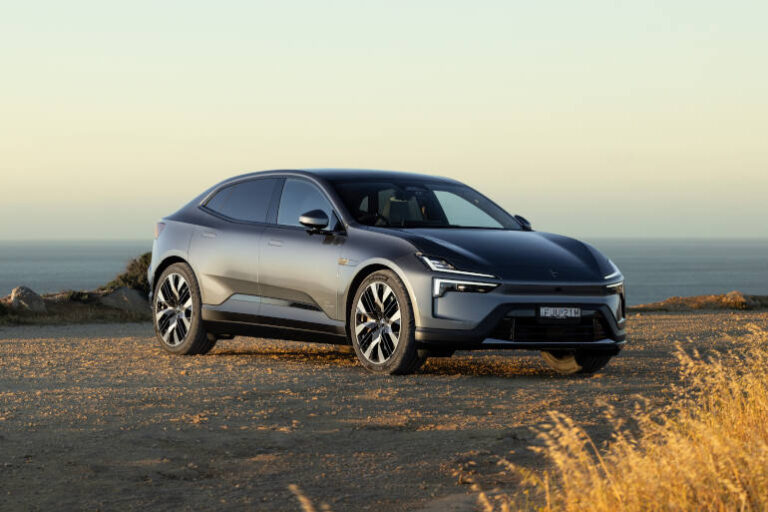
Polestar has set the benchmark for emissions transparency in the EV industry – and their 2024 Sustainability Report gives us a clear look at the carbon cost to manufacture each model. Here’s how the numbers compare across the line-up.
Why Cradle-to-Gate Emissions Matter
Cradle-to-gate emissions refer to the carbon footprint created during the manufacturing process – from raw material extraction to the moment the car leaves the factory. It excludes the use phase and end-of-life recycling but is a crucial indicator of how much embedded carbon goes into each vehicle before it reaches the customer.
According to Polestar, these emissions are the largest contributor to a vehicle’s overall climate footprint.
Polestar 2: The Original Benchmark
- Launch Year: 2020
- Cradle-to-Gate Emissions (2020 model): 26.1 tCO₂e
- Latest Model Year (2024): 23.1 tCO₂e
Through sourcing low-carbon aluminium and 100% renewable energy at the manufacturing plant, Polestar has shaved 3 tonnes of CO₂e off its original electric fastback since launch. The battery module, aluminium production, and logistics are the main contributors.
Polestar 3: Big SUV, Lower Footprint
- Cradle-to-Gate Emissions:
- China (Chengdu) plant: 24.9 tCO₂e
- USA (South Carolina) plant: 25.9 tCO₂e
Despite being a larger SUV, Polestar 3 launched with a lower footprint than Polestar 2 thanks to hydro-powered aluminium smelters and renewable electricity in battery production. Its carbon budget is now embedded into the design process for all new models.
Polestar 4: Fastest, and Cleanest So Far
- Cradle-to-Gate Emissions: 21.3 tCO₂e
- Battery Size: 100 kWh
- Vehicle Weight: 2,351 kg
This SUV coupé is not only the fastest production Polestar (0–100 km/h in 3.8 seconds), it’s also the model with the lowest emissions at launch. Polestar credits its progress to recycled aluminium and renewable energy throughout the supply chain, with traceability down to the mine for high-risk materials like manganese and copper.
Coming Soon: Polestar 5 and Polestar 7
Polestar 5 will debut in 2025 with a bonded aluminium chassis and further emissions cuts. Polestar 7, their first compact SUV, is expected to begin production in Europe and become the brand’s highest-volume vehicle.
“With every vehicle, we deliver an unparalleled driving experience, exquisite design, and impactful sustainability solutions,” the brand states in its 2024 report.
Emissions Comparison Chart
| Model | Cradle-to-Gate Emissions (tCO₂e) | Notes |
|---|---|---|
| Polestar 2 MY21 | 26.1 | Launch figure |
| Polestar 2 MY24 | 23.1 | 11% reduction |
| Polestar 3 (China) | 24.9 | Larger SUV |
| Polestar 3 (USA) | 25.9 | Higher due to location |
| Polestar 4 | 21.3 | Lowest emissions model |
The Mission Zero Vision
Polestar aims to halve per-vehicle emissions by 2030 and become climate neutral by 2040. Their “Polestar 0” project is already delivering results, with identified pathways to cut 10 tonnes of CO₂e from the Polestar 2’s manufacturing footprint using new methods for aluminium and steel production.
As Polestar CEO Michael Lohscheller puts it:
“When the world zigs, we zag. We aim to continue to cut emissions as we accelerate sales.”
Transparency in lifecycle emissions is still rare in the automotive sector. Polestar’s detailed LCAs and open reporting are an invitation for fleets and buyers to make informed choices that align with sustainability targets.