


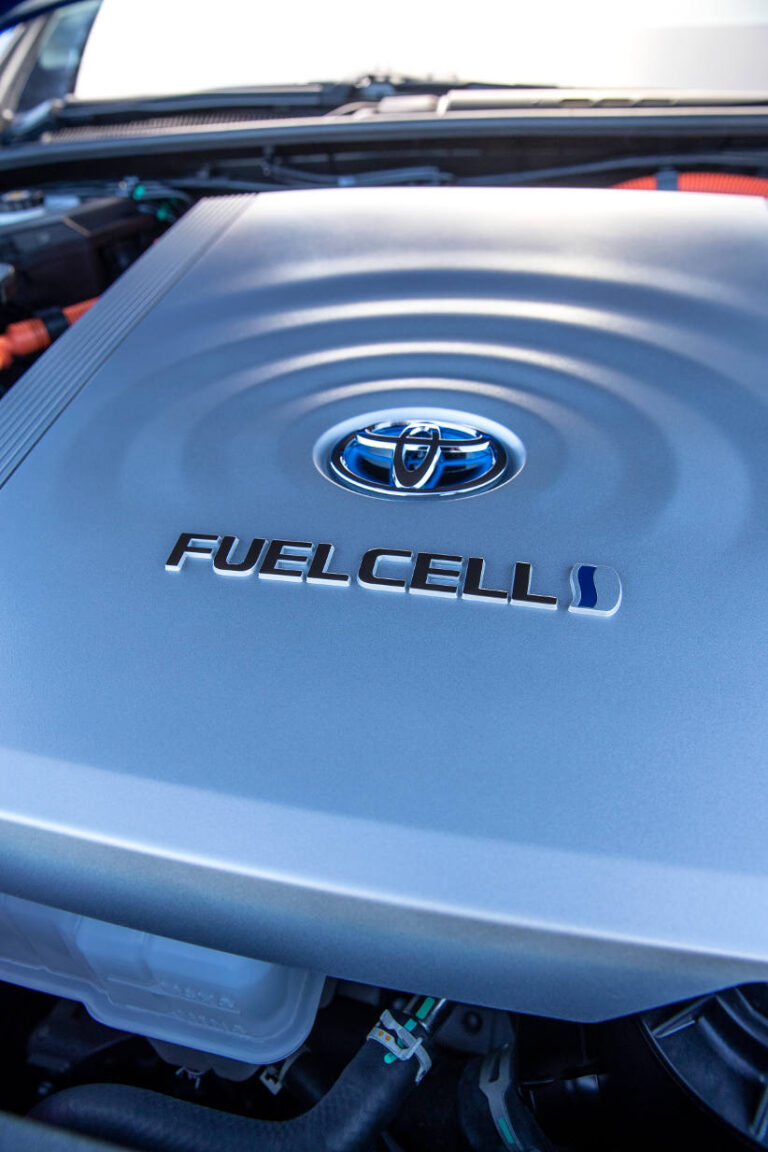
In an exclusive interview with Fleet News Group for the October issue of ALL THINGS FLEET, Toyota Australia Vice President Sales, Marketing and Franchise Operations, Sean Hanley, said hydrogen fuel cells and low carbon liquid fuels will both play important roles in reducing fleet emissions, particularly in heavy-duty and long-range applications.
A Credible Zero-Emission Option
While much of the industry discussion is dominated by battery electric vehicles (BEVs), Hanley emphasised that hydrogen has an equally important role to play.
“Hydrogen fuel cell, which gives zero emissions, is a really credible technology for heavy commercial vehicles,” he said. “You get range, you get towing. The only thing preventing that technology right now is infrastructure and cost.”
For fleets, this means that hydrogen may become a practical alternative to BEVs, especially where vehicles need long driving ranges, fast refuelling or the ability to haul heavy loads.
The Role of Low Carbon Fuels
Hanley also highlighted Toyota’s interest in LCLF – Low Carbon Liquid Fuels – which includes biofuels and synthetic fuels.
“These fuels allow existing internal combustion engines to keep operating but with far lower emissions,” he said. “It’s another pathway that can help decarbonise transport, particularly in markets like Australia where one solution won’t fit all.”
For fleets, LCLF could extend the life of existing ICE platforms while still achieving measurable emissions reductions, making it an attractive transition technology in parallel with electrification.
Trials Already Underway
Toyota is running hydrogen trials in Australia and globally. The Toyota Mirai has been used to demonstrate hydrogen’s potential in passenger cars, but the real opportunity lies in commercial vehicles.
“We’re in discussion with all the major mines about how we can help them decarbonise,” Hanley said. “Battery technology has its place, but it’s not necessarily practical in all applications. Hydrogen will have a role to play, particularly in heavy duty and long-range fleets.”
These efforts sit alongside Toyota’s broader multi-pathway strategy, which spans hybrids, plug-in hybrids, BEVs, fuel cells and LCLF.
Infrastructure and Supply the Hurdle
Hanley was frank about the challenges. “The only thing preventing hydrogen technology right now is infrastructure, and cost,” he said.
Hydrogen refuelling stations remain scarce in Australia, while biofuels and synthetic fuels require scale to be affordable. But Hanley is optimistic about progress. “Over time, infrastructure will build and the cost of hydrogen will come down. The reality is we can make plenty of it in this country, and we can make it green.”
A Fleet Perspective
For fleets, the potential benefits of hydrogen and LCLF are significant. Unlike BEVs, which can take hours to recharge, hydrogen vehicles can refuel in minutes. LCLF, meanwhile, can be used in existing ICE platforms with minimal changes to refuelling operations, meaning faster adoption.
“Battery EVs are one way, and they’ll play their role,” Hanley said. “But they won’t be the whole role. There are other ways to decarbonise, and hydrogen and low carbon fuels are two of them.”
Looking Ahead
Hydrogen and LCLF remain in their early stages, but Toyota is betting on them as part of the long-term solution for decarbonising transport. For fleet buyers, it signals that while BEVs will continue to expand in the short term, hydrogen and alternative fuels may eventually provide the heavy-duty, zero-emission and low-emission options that fleets have been waiting for.