


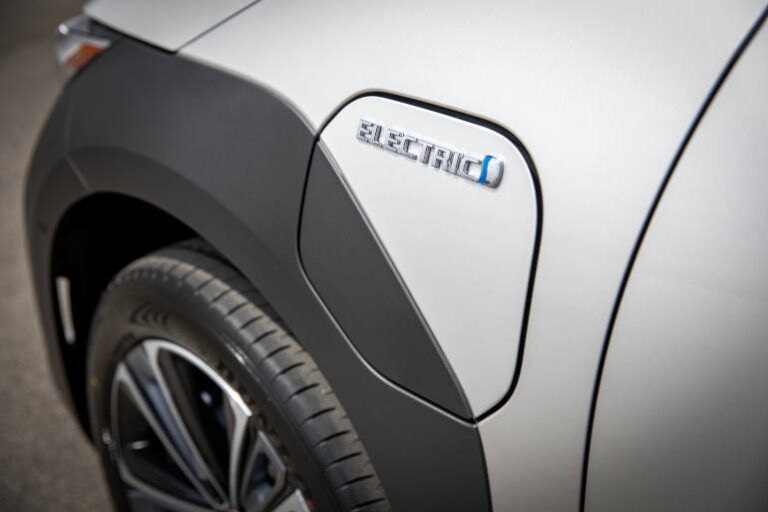
In an exclusive interview with Fleet News Group of the October issue of ALL THINGS FLEET, Toyota Australia Vice President Sales, Marketing and Franchise Operations, Sean Hanley, explained why fleets should view electric cars as part of a bigger toolbox of low- and zero-emission technologies.
EVs Have a Role — But Not the Whole Role
Hanley says electric vehicles are important, but not the only answer.
“BEVs will play a role, but they’re not the silver bullet necessarily to decarbonisation,” he said. “Not all BEVs are going to be suitable for all fleets and all fleet use.”
For organisations running urban-based cars with low mileage, BEVs are a natural fit. “If you’re a city-type driver or a fleet of small passenger vehicles that typically does low mileage, BEVs can work really well,” Hanley said. “You don’t get range anxiety, and the infrastructure is suitable within city limits.”
Fit-for-Purpose Thinking
Fleet Managers face a balancing act between emissions reduction and practicality. Hanley emphasised the importance of matching technology to task.
“The challenge for fleets is to decarbonise, but also apply that decarbonisation in a practical sense,” he said. “Battery technology has its place, but it’s not necessarily practical in all applications.”
Mining companies are a prime example. “We’re having the same conversations with the major mines as we are with city operators — how do we help them decarbonise?” Hanley said. “In some cases, they’re trialling BEVs for staff transport around towns, but in other cases we’re looking at fuel cells or hybrid solutions depending on whether vehicles are underground, above ground or travelling longer distances.”
Residual Value Matters
For fleets, the economics of switching to EVs is about more than just running costs. Resale value is critical to whole-of-life cost.
“The big issue for fleets and BEVs is resale value,” Hanley said. “Hybrids are holding their value really well, which makes them more advantageous right now. Plug-in hybrids are a practical solution because they give you EV driving for most of your city work, but you don’t have to worry about range if you need to travel further.”
Hybrids Still Carry the Load
Toyota’s long track record with hybrids gives customers confidence. “We’ve been in hybrids for 24 years,” Hanley said. “They’re proven, reliable, and right now they make up just under 50 percent of our total sales. For many fleets, hybrid is still the best way to reduce emissions without compromising fit-for-purpose.”
Hydrogen on the Horizon
Hanley also sees hydrogen playing a role in the future fleet mix.
“Hydrogen fuel cell gives you range, towing and zero emissions,” he said. “It’s a really credible technology for heavy commercial vehicles. The only thing preventing it right now is infrastructure and cost, but those barriers will come down. And the reality is Australia can make plenty of green hydrogen.”
The Takeaway for Fleets
Toyota’s message to fleets is clear: choose the right tool for the job.
“A BEV is not necessarily going to be the car for every fleet,” Hanley said. “That’s why we’ll continue to offer options — hybrids, plug-in hybrids, BEVs and fuel cells. Our job is to give fleets practical, fit-for-purpose choices that help them decarbonise.”
With hybrid still dominating, plug-in hybrid on the rise, BEVs expanding, and hydrogen promising longer-term potential, Toyota is making sure fleets aren’t left behind on the road to zero.