

The conversation around electric vehicles (EVs) often centres on passenger cars and consumer adoption. But according to Paul Fox, Chief Strategy Officer at Evie Networks, the next five years of EV growth will look very different – and fleets need to prepare now.
Beyond Cars: Vans and Light Trucks Lead the Next Phase
Evie Networks is already seeing a surge in commercial use of its charging network.
“We’re already seeing a lot of vans and small trucks using our network,” Fox explained. “We’ve got 425 vans and trucks regularly using our charging stations – more than the total reported as sold last year.”
This suggests that many of the vehicles already in circulation are being used intensively, particularly by last-mile delivery fleets. For fleet managers, this means that electrification won’t just be about replacing company cars – it’s coming fast for light commercial vehicles.
Regional Uptake Surprises
The assumption has been that EV fleet adoption would concentrate in Sydney, Melbourne, and Brisbane. Fox admits he was surprised: “Some of the highest use sites for vans and trucks are in Darwin and Proserpine in Far North Queensland.”
This highlights that regional centres – often overlooked in planning – are seeing strong commercial EV uptake. For fleets operating nationally, ensuring charging access in these locations will be as important as building metro capability.
Why Fleets Are Turning to Public Charging
Many operators don’t have depot-based charging. Instead, they’re running small fleets or relying on owner-drivers who garage the vehicles at home, much like taxi or Uber drivers. For these users, public fast charging becomes essential infrastructure.
Fox shared an example: a delivery operator with 15 vans in Sydney. “The guys like our charger at Hungry Jack’s because they can grab a coffee, or if it’s a longer charge, they’ll walk back to the office to collect their dispatch. By the time they return, the vans are ready to go.”
This kind of integration into daily routines demonstrates that public charging can support fleets at scale without major upfront infrastructure investment.
The Push for Fleet Charging Hubs
Looking ahead, Fox sees an opportunity for dedicated fleet charging hubs in industrial areas.
“I’d like to partner up and build hubs to support these people, rather than making them rely only on public charging. It would accelerate adoption if fleets had shared charging infrastructure in the right places.”
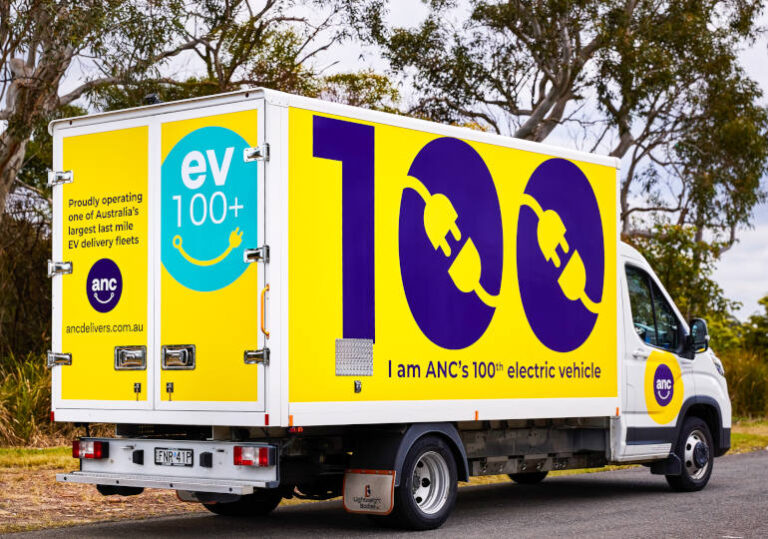
Large logistics operators such as ANC, which recently announced over 100 electric vans, are showing what’s possible. But Fox stressed that many smaller operators also need solutions: “They don’t even own the trucks – why would they want to own a charging station?”
Shared hubs could solve this gap by providing reliable, high-capacity charging without forcing smaller fleets to invest in infrastructure.
What This Means for Fleet Managers
For Fleet EV News readers, the message is clear:
- Light commercials are the next frontier – vans and small trucks will drive much of the growth in EV adoption.
- Regional demand is real – don’t overlook Darwin, Townsville, or other non-metro centres.
- Public charging can fill the gap – particularly for fleets without depot infrastructure.
- Partnerships will matter – shared charging hubs will unlock adoption for a broader range of operators.
The Road Ahead
Over the next five years, Fox expects fleets to play a decisive role in scaling Australia’s EV market. Public charging networks will be essential in supporting this growth, but the real transformation may come from collaborations that create hubs tailored for logistics and commercial operations.
For Fleet Managers, the challenge is to get ahead of this trend: assess your vehicle mix, map where your vehicles travel, and identify where public charging and potential hubs can support your transition.
The passenger EV story may dominate the headlines, but as Fox’s insights show, the real action for fleets is about to shift to the vehicles that keep goods moving every day.
- New Navara: Big Grunt, Now with a Plug
 Nissan will bring a plug-in hybrid Navara to Australia in 2027, giving fleet buyers another electrified option for work that demands towing capacity, payload and four-wheel-drive capability. The all-new Navara Pro PHEV will be Nissan’s first plug-in hybrid model in Australia and its first electrified ute globally. Australia and New Zealand will become the first
 - Could concrete agitators be an EV sweet spot?Concrete agitators could become one of the more practical early applications for electric heavy trucks, with short operating distances, significant idle time and high fuel use creating a duty cycle that may suit battery-electric technology. Speaking with Fleet News Group at Everything Electric in Sydney, Brenton Sweeney, Sales Executive Commercial Vehicles and Equipment at Prancer
- BYD ATTO 2 DM-i Plugs into Fleet DemandBYD’s ATTO 2 DM-i offers fleet buyers a compact plug-in hybrid SUV with up to 90 kilometres of claimed electric driving range, creating an option for organisations looking to electrify daily journeys while retaining petrol capability for longer trips. The five-seat, front-wheel-drive SUV comes in Essential and Premium variants, with different battery capacities and electric
- FREELANDER Takes on the Luxury SUV MarketFREELANDER will launch in Australia and New Zealand in 2027, bringing a new premium SUV brand developed by Chery and Jaguar Land Rover (JLR) into the local market. The FREELANDER 8 will lead the Australian launch, combining JLR-led British design with Chery’s electrified vehicle technology. Australian specifications, pricing and the detailed launch schedule will be
- First e VITARA Delivery Launches Suzuki’s Electric EraSuzuki Australia has delivered its first battery electric vehicle to an Australian customer, marking the start of local customer deliveries for the e VITARA and adding another option for fleets considering electric SUVs. The first vehicle, an e VITARA Motion, was collected by existing Vitara owner Nel Mary Davis from Pennant Hills Suzuki in early