


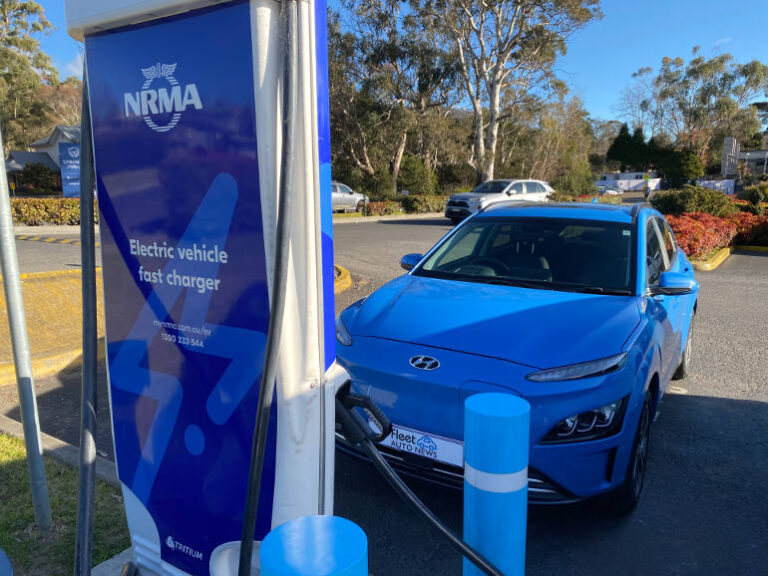
Regional towns across New South Wales are being encouraged to see electric vehicle charging infrastructure as more than a transport issue, with a new program aiming to recognise communities that are making themselves easier and more attractive for EV drivers to visit.
The NSW Government and Electric Vehicle Council (EVC) have launched the EV Friendly Towns program, which will assess how well towns are preparing for the growing number of Australians travelling by battery electric and plug-in hybrid vehicles.
The program arrives as electric vehicles continue to increase their share of the new-car market. According to the announcement, battery electric and plug-in hybrid vehicles represented a record 36 per cent of Australian passenger car sales in June 2026.
For regional communities, the shift creates a new challenge — and potentially a significant economic opportunity.
EV drivers undertaking longer journeys increasingly need to plan stops around charging locations. Those charging stops can also translate into additional time spent at cafes, restaurants, shops, accommodation and local attractions.
NSW Minister for Climate Change and Energy Penny Sharpe said expanding charging availability could help regional communities attract visitors and support local businesses.
“More EVs on our road means more EV charging is required to attract visitors, support local businesses and benefit from this growing market,” Sharpe said.
Electric Vehicle Council CEO Julie Delvecchio said charging infrastructure was increasingly influencing where EV drivers chose to stop during road trips.
“An EV driver doesn’t just pass through a town. They stop to charge, and while they’re there, they spend time and money — on food, coffee, a place to stay,” Delvecchio said.
That changes the business case for public charging infrastructure.
While charging networks are often discussed primarily in terms of supporting EV adoption or reducing transport emissions, the program is positioning chargers as part of broader regional tourism and economic development strategies.
“EV infrastructure isn’t just a transport investment — it’s a tourism and economic development opportunity,” Delvecchio said.
What makes an EV-friendly town?
The program will assess participating communities across several areas, including the availability of charging infrastructure, accessibility, visitor amenities, tourism experiences, engagement with local businesses and future planning for EV adoption.
This means simply installing a public charger may not be enough.
For councils and tourism organisations, the broader opportunity is to consider where chargers are located, what drivers can access while their vehicle is charging and how EV infrastructure fits with local economic and tourism strategies.
The awards will recognise communities across three population categories: Tiny, for populations below 1,500; Small, covering populations from 1,500 to 5,000; and Top, for communities with more than 5,000 residents.
Communities do not need to already be EV leaders to participate. The program is intended to recognise established initiatives as well as towns taking practical steps to improve their preparedness for increasing EV tourism.
Applications opened on 30 July and close on 25 September 2026, with information sessions scheduled for 11 August and 10 September. Applications can be submitted by councils, visitor information centres, tourism organisations and other eligible entities, although non-council applicants will need evidence of support from their local council.
As EV numbers increase, charging infrastructure is becoming another consideration in how regional towns plan their transport networks, visitor facilities and local economic development.
For councils, the question may increasingly shift from whether EV drivers will arrive in their communities to whether those communities are ready to encourage them to stop — and spend.