


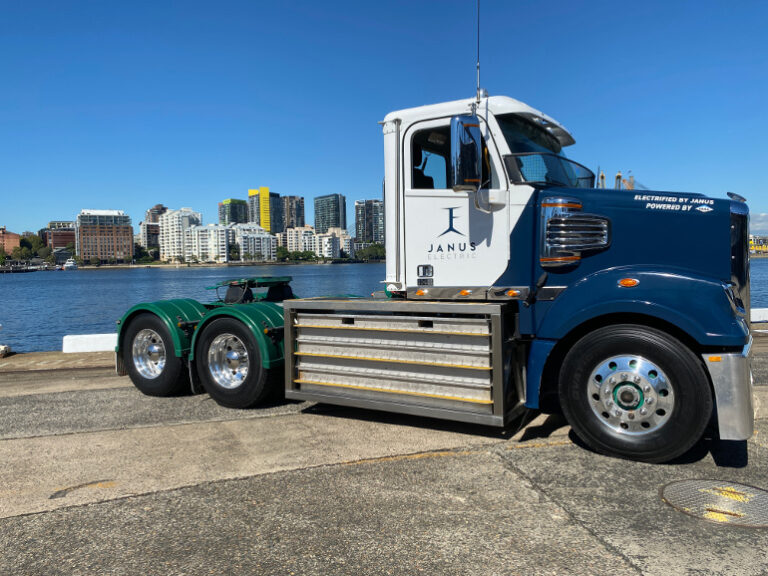
Janus Electric has released its Q2 FY26 Quarterly Activities and Cash Flow Report, alongside an incoming CEO letter to shareholders, outlining progress in operations, early international activity, and a renewed focus on commercial execution and capital discipline.
The update covers the three months ended 31 December 2025 and provides insight into how the business is performing on the ground, as well as the challenges ahead as it works to convert technical validation into sustainable commercial outcomes.
New leadership and sharper commercial focus
Ben Hutt, who joined Janus Electric as Managing Director and CEO in January, said his first weeks have been spent conducting an end-to-end review of the business, from manufacturing and operations through to sales, customer engagement and partnerships.
“It has been three weeks since I joined Janus Electric as CEO. I accepted this role because I saw a company with a technically validated product demonstrated in real-world operating environments, alongside a commercial model that now requires sharper focus and execution,” Hutt said.
The review identified a clear gap between strong product performance in operational fleet environments and the need to strengthen sales processes, go-to-market discipline and commercial execution.
“Addressing this imbalance is now a central priority for management,” he said.
Operational performance and fleet activity
For the quarter, Janus reported operational income of $896,000, up 190 per cent on the prior period, reflecting increased activity and initial export orders to California. Truck conversion and charge station sales totalled $472,000, with a further $1.558 million classified as deferred revenue. Recurring and subscription revenue from charging stations and Batteries-As-A-Service contributed $424,000.
By the end of December, Janus’ converted trucks had recorded more than 591,000 kilometres of commercial operation, completed 3,360 battery swaps and abated 1,578 tonnes of CO₂. A total of 25 trucks were converted and in operation, supported by more than 1.1 GWh of energy use, including renewable applications.
During the quarter, the eighth truck was delivered to Cement Australia, with two additional trucks nearing completion on the assembly line. Janus also shipped its first two export orders to the United States in December, with arrival at the Port of Los Angeles expected in mid-February 2026. These trucks will be converted by a Californian dealer and are expected to be fully operational in the fourth quarter.
Charging infrastructure continued to expand, with a new Janus Charge and Change Station delivered to Dublin in South Australia, and increased battery swap and charging activity at the Moorebank Intermodal Precinct in NSW.
Cost discipline and funding position
A key theme of the update was tighter cost control. Primary operating expenditures, including staff, administration and corporate costs, were reduced by 49 per cent compared to the prior corresponding period.
Hutt said a line-by-line review of operating expenditure was underway, with a focus on prioritising essential spend and reducing non-core costs.
“These actions are aimed at improving capital efficiency and seeking to improve the Company’s cash runway,” he said.
At the end of the quarter, Janus held a cash balance of $635,000, with receivables and liquid assets totalling just over $1.0 million. The financial documents indicate less than one quarter of is funding available at the current rate of cash outflows, with continued operations dependent on securing additional funding.
Janus confirmed it is progressing a range of funding options, including a previously announced $5 million strategic investment linked to a distribution and licence agreement in sub-Saharan Africa, which has not yet been received but remains contractually committed. The company has also entered into a definitive agreement with a Toronto-based partner in Canada, though no revenue guidance has been provided.
Looking ahead
While emphasising the need for capital discipline, Janus highlighted that its core technology has been validated in real-world fleet operations and that policy settings in markets such as Canada and California remain supportive of heavy vehicle electrification.
“Janus Electric has a validated technology platform and operates within policy environments, particularly in North America, that are supportive of fleet electrification,” Hutt said. “The Company is now focused on strengthening commercial execution and capital discipline.”
For fleet operators, the update reinforces both the operational potential of Janus’ battery-swap model and the importance of commercial scale, funding certainty and execution as the business moves into its next phase of development.