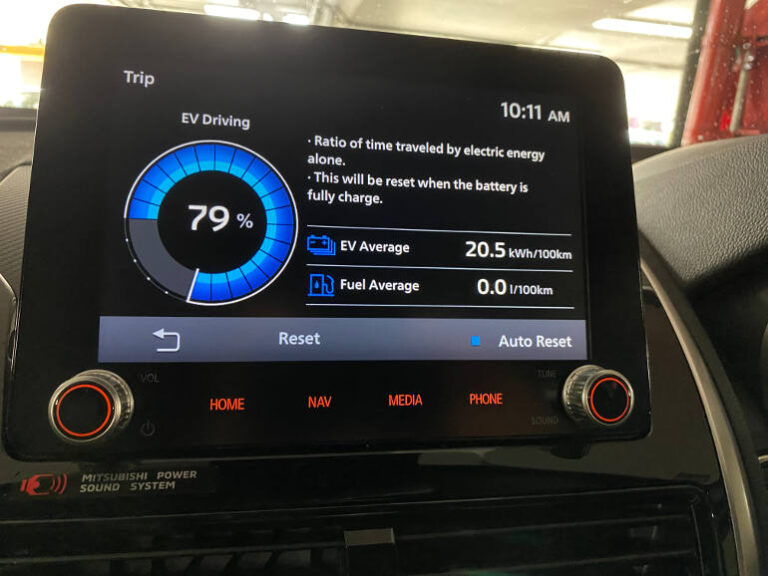
Plug-in hybrids promise the best of both worlds: electric driving for short trips, petrol for long journeys, and a smoother pathway for organisations beginning their fleet electrification journey. But at the Fleet EV Expo for Local Government last month, experts made one thing very clear: PHEVs only deliver benefits when drivers actually plug them in.
When fleets don’t enforce charging behaviour, PHEVs quickly become expensive petrol vehicles delivering none of their intended emissions or cost savings. The panel didn’t mince words — and their experience is a warning to any fleet considering plug-in hybrids as a transitional step.
Discussing real-world fleet experience, moderator John Ravlic shared an issue many councils have encountered:
“They don’t buy plug-in hybrids because they’re abused. Nobody wants to charge them, so they just run them on petrol. And of course, that defeats the purpose of actually having a plug-in hybrid.”
This is the core PHEV problem in fleets. Because PHEVs still operate on petrol when uncharged, the electric capability is easily ignored. As a result:
- Fuel consumption rises
- Emissions stay high
- The electric motor becomes dead weight
- The higher upfront cost can’t be justified
Fleets wanting low-emission outcomes often end up with worse performance than a standard hybrid.
Pool Fleets Are the Worst Hit
Pool vehicles shift between multiple drivers with no single person responsible for plugging in at the end of a trip. Ravlic stressed that EVs — especially PHEVs — must come with firm expectations for the people using them.
“Whatever electric vehicles you take in need to come with a set of operating procedures… and there needs to be some consequence attached to that.”
Without those procedures, PHEVs return to the depot uncharged and begin the next shift running on petrol only.
Charging Behaviour Matters More Than Technology
Although the panel spoke primarily about BEVs, their observations apply directly to PHEVs — particularly around destructive or inefficient charging habits.
Philip Browne (Managing Director, Autorola Australia / Director, Vehicle Assessments Australia) noted:
“They are charging to 100% every time they plug it in. That is not ideal… Constantly topping up a battery every day… is also not so good.”
For PHEVs, the opposite behaviour is the bigger issue — drivers never plug them in at all. But Browne’s point still stands: charging behaviour determines whether the battery performs as intended.
Allan Fowler (National Client Relationship Manager – Fleet, Autorola Australia) also reminded fleets that operator behaviour shapes battery outcomes.
“State of health will depend on how you were charging, discharging, how you were using the vehicle.”
While he was referring to long-term battery condition and resale value, the same logic applies to PHEVs in daily operation: use them incorrectly, and you lose the benefit.
Driver Unfamiliarity Creates Real-World Operational Problems
Beyond charging behaviour, EV unfamiliarity is driving up support calls. Anthony Curtin (Executive Sales Manager, Ultra Tune) shared several examples that directly affect PHEVs too.
“We’ve helped a lot of people over the phone… people couldn’t even pull the charger out of the socket because they weren’t familiar with the vehicle.”
While BEVs force drivers to charge eventually, PHEVs let them avoid learning — and that’s where fleets lose the most value.
The Fleet Reality: PHEVs Are a Management Challenge, Not a Technology Problem
The panel made it clear that PHEV success relies on fleet governance, not engineering capability.
To get the intended benefits, fleets must:
- Set clear charging rules
- Train drivers on EV behaviour
- Add consequences for non-compliance
- Use telematics to monitor plug-in rates
- Make charging easy and accessible
- Include PHEVs in pool-vehicle auditing
When fleets do this, PHEVs become a powerful transition tool. When they don’t, the vehicles consistently underperform — and the fleet pays for features that no one uses.
Should Fleets Still Consider PHEVs?
Absolutely — but only if they commit to operational discipline.
PHEVs offer:
- Near-EV running for local trips
- Engine backup for remote or unpredictable routes
- Lower fuel dependency
- Lower workshop time
- Compatibility with existing fleet infrastructure
But the panel’s insights are a strong warning: Without consistent charging behaviour, fleets will never see the economic or environmental benefits they paid for.
Plug-in hybrids work beautifully — when plugged in. And that single behaviour determines whether they are a stepping stone to electrification, or an expensive detour.
- New Navara: Big Grunt, Now with a Plug
 Nissan will bring a plug-in hybrid Navara to Australia in 2027, giving fleet buyers another electrified option for work that demands towing capacity, payload and four-wheel-drive capability. The all-new Navara Pro PHEV will be Nissan’s first plug-in hybrid model in Australia and its first electrified ute globally. Australia and New Zealand will become the first
 - BYD ATTO 2 DM-i Plugs into Fleet DemandBYD’s ATTO 2 DM-i offers fleet buyers a compact plug-in hybrid SUV with up to 90 kilometres of claimed electric driving range, creating an option for organisations looking to electrify daily journeys while retaining petrol capability for longer trips. The five-seat, front-wheel-drive SUV comes in Essential and Premium variants, with different battery capacities and electric
- Toyota Plugs More Choice into RAV4 RangeToyota will expand its RAV4 plug-in hybrid range with a new GXL two-wheel-drive variant in the first quarter of 2027, giving fleet buyers another option for combining electric daily driving with petrol-powered longer journeys. The new mid-range model will offer a claimed electric-only range of 121km on the WLTP test cycle and support both AC
- Chery brings plug-in hybrid power to the work uteChery believes its new Stockman could give trade and operational fleets a pathway to reduce fuel consumption without giving up the flexibility of diesel. Unveiled at Everything Electric in Sydney, the Stockman combines a 2.5-litre turbo-diesel engine with a plug-in hybrid system, producing 350kW and 800Nm. For fleet buyers, the more important number could be
- Charging behaviour could make or break PHEV fleet savingsThe transition to electric and plug-in hybrid vehicles is not just a vehicle selection exercise for Fleet Managers. It also requires charging access, driver education and enough data to confirm that vehicles are being used as intended. Marcus Walker, National Fleet Sales Manager at BYD Australia and New Zealand, told the Fleet News Group in