

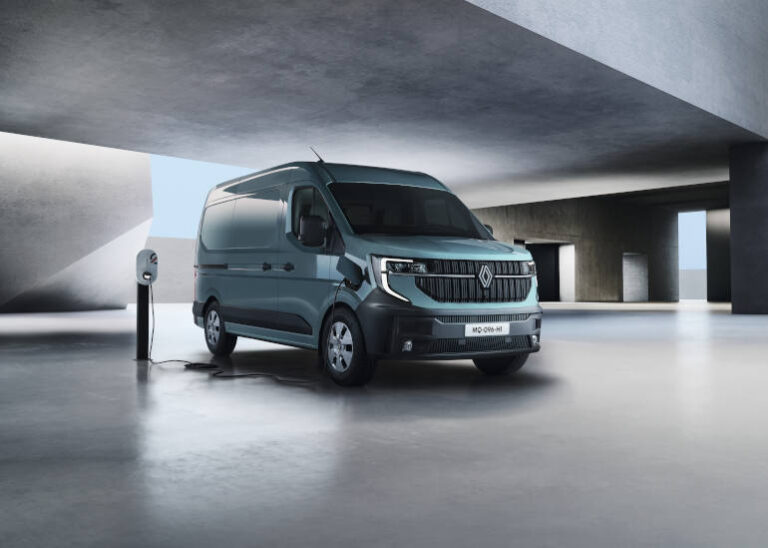
Renault has confirmed the arrival of an all-electric version of its flagship large van, signalling a clear intent to compete more aggressively in one of the most important segments for Australian fleets.
Due in local showrooms from June 2026, the electric Renault Master E-Tech will sit alongside diesel variants in the new-generation range, giving buyers a direct choice between traditional and zero-emission powertrains in the same vehicle platform.
For fleet operators looking to reduce emissions without downsizing vehicle capability, that positioning is significant. The large van segment has historically been dominated by diesel models, but electrification is starting to gain momentum as more OEMs bring purpose-built electric vans to market.

A serious contender for urban freight and service fleets
The electric Master is powered by an 87kWh battery pack delivering a claimed driving range of more than 400km on the WLTP test cycle. That range places it squarely in the operating window for metropolitan delivery, trade and service fleets that typically return to base each day.
Fast charging capability of up to 130kW means the vehicle is compatible with the most widely available DC charging infrastructure in Australia, supporting overnight depot charging or rapid top-ups during busy operating schedules.
From a fleet planning perspective, those specifications are increasingly becoming the baseline expectation rather than a premium feature.
The introduction of a large electric van with this level of range and charging capability also reflects a broader shift in the market. Fleet managers are under pressure to reduce emissions while maintaining productivity, and large vans are often among the most heavily utilised assets in urban operations.
Designed to compete on capability, not just emissions
One of the challenges for electric vans entering the Australian market has been payload and durability. Renault appears to be addressing that directly, with the electric Master offering payload of up to 1164kg and Gross Vehicle Mass (GVM) of up to 3500kg depending on specification.
That keeps the vehicle within the critical licence threshold for standard car drivers while still delivering meaningful load capacity.
The new-generation Master platform also focuses on operational practicality. The side loading door is sized to accommodate a standard forklift pallet, and a flat bulkhead behind the front seats maximises usable cargo space—features that matter more to fleet buyers than headline technology.
Renault has also introduced a redesigned cabin with improved ergonomics and connectivity, while retaining physical buttons and controls to reduce driver distraction. A fold-down centre seat can be configured as a mobile workstation, providing a practical solution for drivers completing paperwork or managing job schedules on the road.
Competition intensifies in the large electric van market
The arrival of the electric Renault Master adds another credible option to a segment that is rapidly evolving as fleets begin transitioning away from diesel.
Large vans are often the backbone of logistics, maintenance and service operations, and they are typically among the first vehicles targeted for electrification because of predictable routes and centralised depots.
For Fleet Managers, the growing number of electric large vans creates genuine procurement choice for the first time. Instead of trialling smaller vehicles or adapting passenger models, organisations can now assess purpose-built electric vans designed for commercial workloads.
That competition is expected to drive improvements in range, payload, charging performance and total cost of ownership over the next few years.
Part of a broader model rollout
Renault says the new-generation Master—available in both diesel and electric form—is a key part of its product renewal strategy in Australia.
Renault Australia General Manager Glen Sealey said the brand is focused on strengthening its position in the commercial vehicle market.
“The new-generation Renault Master is a key part of Renault Australia’s model revitalisation,” said Sealey.
“Last year Renault Australia promised six new models in the next 18 months and the new-generation Renault Master shows we are delivering. Plus there is more to come.”
Full pricing and detailed specifications for the electric Renault Master will be announced closer to the June 2026 launch.
For fleet buyers, the timing is notable. With emissions targets tightening and operating costs under scrutiny, the arrival of another large electric van option provides a practical pathway to decarbonise high-utilisation vehicles without compromising on size, capability or productivity.
- How to Install EV Charging Without Shutting Down the Depot
 Buying electric vehicles may be the visible part of fleet electrification, but much of the hard work can happen underground. Trenching, conduits, electrical upgrades, switchboards, charger foundations, communications, traffic management and electrical shutdowns all need to be completed while the depot continues doing its normal job. Experience from the Local Council EV Integration Project involving
 - Design the Depot Once: Future-Proofing EV Charging for the Fleet You’ll Have LaterFleet electrification rarely happens in one hit. Passenger vehicles may move first, followed by light commercial vehicles and, as suitable products become available, trucks and other specialised equipment. That creates a challenge for depot charging: how much infrastructure should a fleet build today for vehicles it may not purchase for several years? The Local Council EV
- Kinetic Turns Heatherton Into an Electric Bus HubKinetic has completed a major charging infrastructure upgrade at its Heatherton bus depot in Melbourne’s south-east, paving the way for every urban route bus operating from the site to become zero-emission by the end of 2026. The project increases the depot’s electric bus charging capacity from 12 vehicles to 30, allowing the site to support
- Duratec Accelerates Fleet ElectrificationAustralian engineering, construction and remediation contractor Duratec has started electrifying its vehicle fleet as part of a broader strategy to reduce diesel use across its operations. The company has acquired an initial eight fully electric BYD vehicles, along with an electric van, as it begins replacing diesel-powered utility vehicles. One of the new EVs will
- City of Parramatta named finalist in 2026 Fleet Sustainability AwardThe City of Parramatta has been named a finalist in the 2026 Fleet News Group Fleet Sustainability Award, with judges recognising its structured and practical approach to fleet electrification and the strong commercial outcomes being delivered alongside emissions reduction. The Fleet Sustainability Award recognises organisations demonstrating that environmental improvement can be integrated into effective fleet