


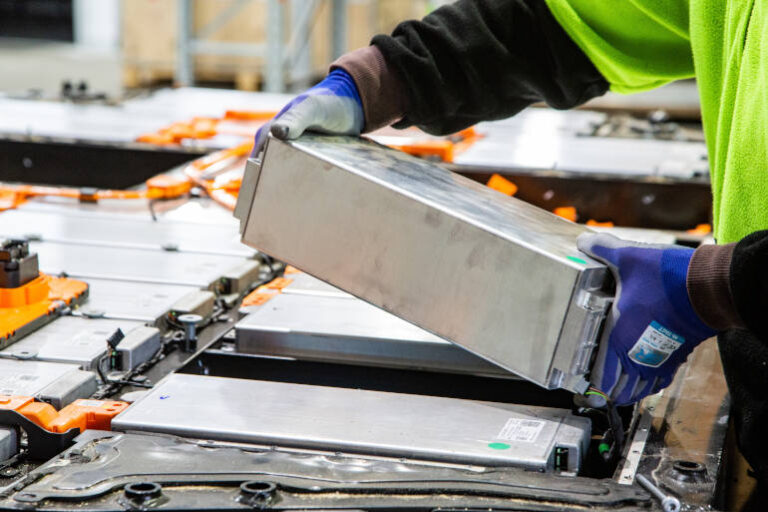
BMW Group Australia has partnered with leading recycler EcoBatt to establish a new electric vehicle (EV) battery recycling program that recovers over 90 per cent of materials from high-voltage lithium-ion batteries at the end of their life.
The collaboration marks a major step towards a circular economy for EVs, ensuring critical minerals such as lithium, cobalt, nickel, manganese, and graphite are recovered and reintroduced into manufacturing supply chains, while preventing hazardous waste from reaching landfill.
The partnership coincides with the launch of EcoBatt’s new Lithium Battery and Battery-in-Devices Shredding (BIDS) Plant in Campbellfield, Victoria — the first of its kind in Australia. Using advanced shredding and separation technology, the facility can process up to 5,000 tonnes of batteries each year and extract valuable materials for reuse. Additional facilities are planned for Western Australia and New Zealand.
Under the new program, BMW and MINI dealers will transport recovered EV batteries to EcoBatt’s Battery Discharge Plant in Campbellfield, where residual energy is safely removed to eliminate thermal risk. Energy recovered from this step is reused within the facility’s operations to reduce carbon emissions.
The batteries are then processed at the BIDS plant, where metals, plastics, and casings are separated, and black mass — a dense material containing key battery minerals — is extracted. The black mass is supplied to refiners for recovery and reintegration into the production of new high-voltage batteries.
BMW’s local recycling initiative aligns with its global sustainability strategy. In Germany, the company operates its own Recycling and Dismantling Centre and maintains long-term partnerships with technology providers such as SK tes to recover and reuse critical minerals.
For fleet operators and sustainability managers, this development reinforces the automotive industry’s direction toward full lifecycle management of EV assets. As fleets expand their zero-emission vehicle portfolios, the assurance of a local, high-efficiency recycling pathway provides both environmental and operational benefits — reducing risk, supporting ESG targets, and improving supply chain resilience.
BMW Group’s commitment to circularity continues to demonstrate how global manufacturers are closing the loop on EV production, from design to recycling, helping to accelerate Australia’s transition to sustainable mobility.