

When most people wind down for the summer holidays, council fleets ramp up. Public spaces need maintaining, pool cars stay busy, and essential services continue — even as residents flock to beaches, parks and events.
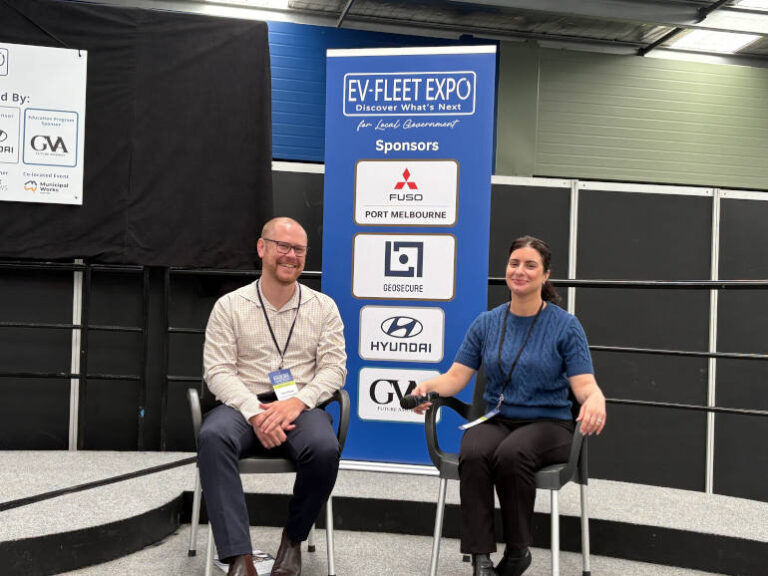
At the Fleet EV Expo, one panel offered a refreshing reality check on what an EV transition actually looks like when you’re responsible for delivering community Levels of Service (LoS) every single day.
And the takeaway was clear: You don’t electrify the fleet — you electrify the tasks.
Start With the Job, Not the Vehicle
Grant Andrews, Managing Director at Uniqco, set the tone early:
“You need to look at the application first… sometimes you have to think outside the box.”
Councils often discover that their operational needs are more EV-friendly than they assumed.
Andrews shared the classic example of staff insisting EVs wouldn’t work for parks and plumbing crews who “travel too much.” The data said otherwise. Once telematics was fitted:
“There was no way that they were even going to do more than 150 Ks in a day… meaning they could actually go out and buy virtually anything that’s standing here.”
In other words: the job was always suitable. The perception wasn’t.
Using Real Data to Protect Levels of Service
Both Catherine Singh, Senior Fleet Officer at City of Port Phillip, and Chris Wood, Fleet Replacement Program Officer at Merri-bek City Council, echoed the same theme — data is the key to protecting service levels during transition.
Singh explained how Port Phillip worked through it:
“Fit for purpose assets are the main consideration… we worked with end users to determine their usage… and how we could best help them transition.”
The surprise? Many utes weren’t needed at all.
“In actual fact, we were able to transition to electric vans instead… they didn’t need towing but were still a usable asset.”
Wood found similar opportunities at Merri-bek:
“It’s about leading the people on the journey and educating as you go… busting some myths along the way.”
Summer takeaway: Before you replace a vehicle, understand the service it delivers. The EV often already fits.
Partial Electrification Keeps Services Running Today
Not every service can go full EV yet — and that’s fine. Wood described the graffiti-removal fleet. Some assets can electrify the body but not the chassis. Others can electrify the power systems but not payload. The solution?
“EV technology is just not there… so we’ve got quotes to have an EV truck chassis with a graffiti body.”
“We have a truck chassis, but not a fit for purpose body… and a fit for purpose body, but not a truck chassis.”
Andrews added that many councils can reduce emissions immediately by electrifying auxiliary functions such as PTOs, heating, and equipment operation, even if the truck itself cannot yet be replaced.
Holiday message: Every drop of emission reduction counts — even if you haven’t gone full BEV.
Charging Discipline Is a Behavioural Journey, Not a Technical One
A big concern for councils starting out is: Will charging disrupt service delivery?
Singh was clear:
“The end user is responsible for plugging it in after each use… It’s just to get into the habit.”
City of Port Phillip runs more than 30 electric pool cars, and after a few months, the system became second nature.
Wood emphasised the same point:
“Induction is key… bringing them on the journey of how it needs to be treated.”
This holiday season, while people unplug from work, council fleet drivers are learning to plug in consistently.
Managing Battery Health to Maintain Reliability
Battery life came up — and the answers were reassuring. Wood shared:
“The best way to manage a battery is keep the charge between 20 and 80%… never fully discharged or fully recharged.”
Even older EVs at Merri-bek are still serviceable:
“We’ve got 2017 Hyundai Ioniqs… they’ll still go about 60 to 70% of what they were originally rated to.”
Singh added:
“Battery deterioration is inevitable, but it won’t impact the asset as greatly as you’d think.”
Which means the holiday fleet can keep rolling for years to come.
Charging Infrastructure and Internal Knowledge Need to Be Shared
One audience member raised a hidden risk — the “EV expert” going on leave during peak service season. When the only person who knows how to reset a charger is overseas, operations stall.
The group agreed: councils need:
- Clear signage
- Staff training
- Troubleshooting guides
- Broader organisational knowledge
Summer lesson: EV capability cannot live in one person’s diary.
EVs Become Normal — Faster Than Expected
Perhaps the most encouraging insight came from the audience floor:
“There was a lot of excitement to begin with, but now it’s just every day. It’s just such a normal thing.”
That’s the quiet magic of the transition. The community still gets the same (or better) Level of Service. The fleet still shows up. But it does so with fewer emissions, quieter operation, and lower long-term costs.
EV Transition Is a Service-Delivery Process, Not a Vehicle-Delivery One
This holiday period — while beaches are packed, bins are overflowing, and parklands are working overtime — council fleets will continue to deliver the services residents rely on.
The panel’s message to fleets was timeless:
- Understand the operational task
- Match the right technology to deliver service levels
- Use data to eliminate guesswork
- Bring the workforce along
- Electrify what you can now
- Improve reliability, not just emissions
Because ultimately: The community doesn’t care what powers the fleet — only whether the services show up.
And thanks to thoughtful planning by councils like City of Port Phillip and Merri-bek City Council, EVs are proving they can deliver.
- FREELANDER Takes on the Luxury SUV Market
 FREELANDER will launch in Australia and New Zealand in 2027, bringing a new premium SUV brand developed by Chery and Jaguar Land Rover (JLR) into the local market. The FREELANDER 8 will lead the Australian launch, combining JLR-led British design with Chery’s electrified vehicle technology. Australian specifications, pricing and the detailed launch schedule will be
 - First e VITARA Delivery Launches Suzuki’s Electric EraSuzuki Australia has delivered its first battery electric vehicle to an Australian customer, marking the start of local customer deliveries for the e VITARA and adding another option for fleets considering electric SUVs. The first vehicle, an e VITARA Motion, was collected by existing Vitara owner Nel Mary Davis from Pennant Hills Suzuki in early
- Tesla Model Y wins 2026 Novated Lease Car of the YearThe Tesla Model Y has been named the 2026 Fleet News Group Novated Lease Car of the Year, after recording the highest number of novated leases among NALSPA members. Unlike the other vehicle categories in the Fleet News Group Awards program, the Novated Lease Car of the Year was not decided by a judging panel or
- Volkswagen ID. Buzz Cargo wins 2026 Fleet EV of the YearThe Volkswagen ID. Buzz Cargo has been named the 2026 Fleet EV of the Year in the Fleet News Group Awards, finishing ahead of two very different electric fleet propositions after assessment by fleet industry judges using Best Value Analysis. The Volkswagen ID. Buzz Cargo BEV 550 competed against the Toyota HiLux SR BEV 4×4 Double Cab Pickup and Kia EV5 Air
- Toyota Plugs More Choice into RAV4 RangeToyota will expand its RAV4 plug-in hybrid range with a new GXL two-wheel-drive variant in the first quarter of 2027, giving fleet buyers another option for combining electric daily driving with petrol-powered longer journeys. The new mid-range model will offer a claimed electric-only range of 121km on the WLTP test cycle and support both AC