

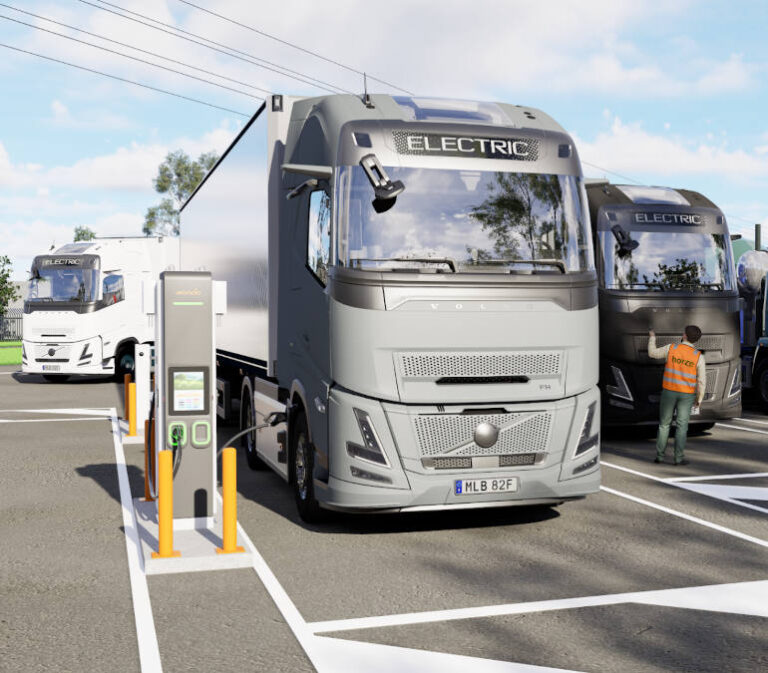
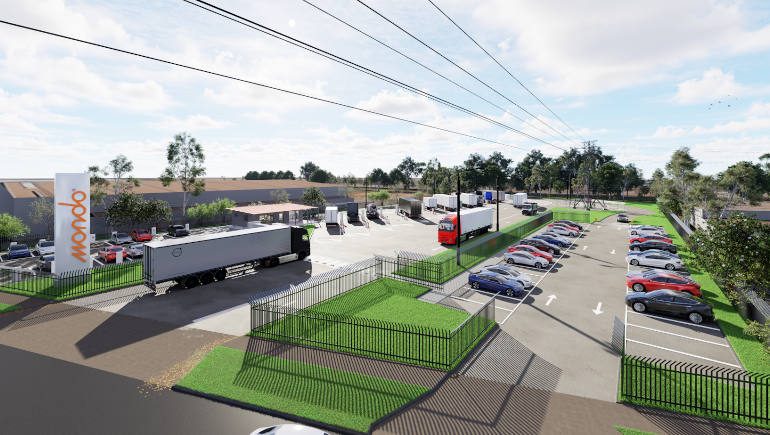
Australia’s transition to cleaner road freight has taken a major step with confirmation that Melbourne’s west will soon host the nation’s first dedicated electric truck charging hub. Supported by a $12.3 million grant from the Australian Renewable Energy Agency (ARENA), the project will be led by Mondo Power, delivering infrastructure designed specifically for heavy battery electric vehicles (BEVs).
Located in Laverton North, the hub will feature 14 dual-plug chargers, purpose-built to support the increasing demand for zero-emission heavy transport. For Fleet Managers exploring the feasibility of electrification, this site is positioned to serve as a real-world case study.
“Through Mondo’s project, we’ll be able to highlight to the heavy transport sector how electrification can be integrated into their existing business models and drive down the high emissions from transporting goods on our roads.”
ARENA CEO Darren Miller
The hub will not only provide charging services but also incorporate membership agreements, giving operators access to high-speed charging, set pricing, and driver amenities. Importantly, the funding package also offsets the total cost of ownership for 20 heavy BEV trucks, helping early adopters overcome initial barriers.
For fleet operators, this announcement demonstrates how industry and government are working together to reduce the 22% of Australia’s emissions that come from transport. The hub will allow companies to test operational models, understand charging patterns, and prepare for wider electrification.
- Parramatta found a simple way to tackle EV resistance
 Range anxiety isn’t always solved with another spreadsheet. Sometimes you need to hand someone the keys. That’s one of the lessons from City of Parramatta’s fleet electrification program, where an EV drive week has become an important tool for building employee support for the transition. Speaking at Everything Electric Sydney during a panel featuring finalists
 - Ausgrid’s charging strategy goes well beyond the depotInstalling chargers at the depot might be the obvious starting point for fleet electrification. For Ausgrid, it wasn’t going to be enough. As the electricity network continues electrifying passenger vehicles, vans and trucks, it has developed a charging strategy designed around how employees actually use fleet vehicles. Speaking during the Fleet News Group Awards finalists
- For Allianz, EVs are now business as usualFor many organisations, fleet electrification still means pilots, trials and discussions about what might happen next. At Allianz, the conversation has moved on. After starting its transition with a small pilot of 12 vehicles two years ago, the insurer has reached the point where electric vehicles are becoming part of its normal fleet replacement process.
- A Charger That Powers Up Isn’t Finished: Why Commissioning Matters for Fleet EV ChargingAn EV charger can be installed, connected and apparently operating — and the charging system can still be wrong. That is one of the more important lessons from the Local Council EV Integration Project involving Wyndham, Brimbank and Moonee Valley councils. As fleet charging installations become larger, depots are adding not only chargers but load
- How to Install EV Charging Without Shutting Down the DepotBuying electric vehicles may be the visible part of fleet electrification, but much of the hard work can happen underground. Trenching, conduits, electrical upgrades, switchboards, charger foundations, communications, traffic management and electrical shutdowns all need to be completed while the depot continues doing its normal job. Experience from the Local Council EV Integration Project involving