

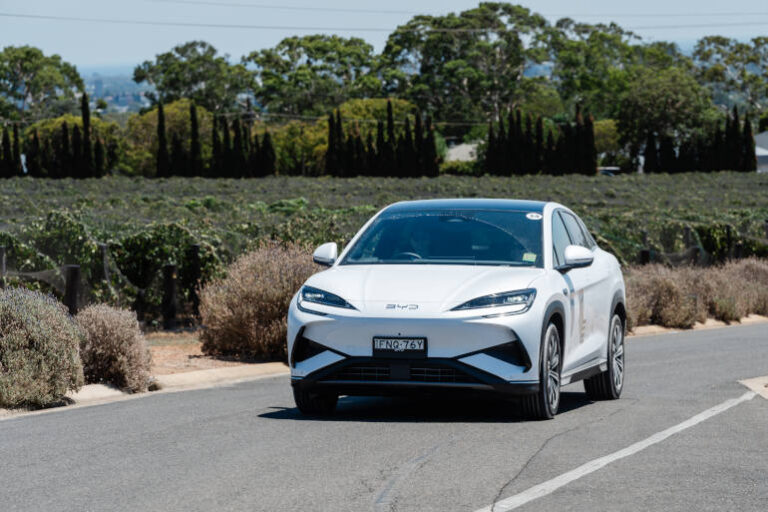
Electric vehicle sales played an increasingly influential role in Australia’s new car market in January 2026, reinforcing the structural shift underway in both private and fleet purchasing as electrified models continue to gain traction.
According to the latest VFACTS data released by the Federal Chamber of Automotive Industries (FCAI), total new vehicle sales reached 87,092 units, up 0.3 per cent year-on-year, signalling a steady start to the year. Within that total, battery electric vehicles (BEVs) accounted for 8.4 per cent of all sales, while hybrids and plug-in hybrids continued to capture growing market share.
Electrification momentum continues
The January figures confirmed a further decline in petrol-only vehicles, down 14 per cent compared with January 2025, as buyers increasingly opt for electrified alternatives. Plug-in hybrid vehicles (PHEVs) recorded particularly strong growth, with 5,161 sales, representing 5.9 per cent of the market and a 170.5 per cent increase year-on-year.
Hybrid vehicles accounted for 17.4 per cent of all new vehicle sales, highlighting that while BEVs continue to expand, many buyers — including fleets — are still taking a staged approach to electrification.
New players dominate January EV rankings
Sales data compiled by Carloop using VFACTS and Electric Vehicle Council (EVC) data shows that January’s EV market was dominated by newer brands and recently launched models.
The top-selling electric vehicles in January 2026 were led by BYD, which placed multiple models in the top ten. The BYD Sealion 7 topped the chart with 1,171 sales, followed by the BYD Atto 2 with 562 sales.
Strong results were also recorded by ZEEKR with the 7X (418 sales) and Geely’s EX5 (415 sales), underlining the growing impact of Chinese OEMs on Australia’s EV market.
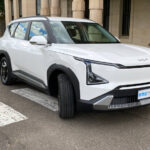
Despite increased competition, Tesla remained a key player, with the Model Y recording 288 sales in January, alongside 213 sales for the Model 3. The Kia EV5 also featured strongly with 281 sales, reflecting continued interest from both private buyers and fleets.
Calendar year results highlight diverging brand performance
Looking beyond the January snapshot, Electric Vehicle Council data highlights contrasting outcomes for major EV brands across calendar year 2025.
Polestar recorded a 38.5 per cent increase in sales compared with 2024, with total national volumes reaching 2,373 vehicles, indicating steady growth from a relatively small base.
By contrast, Tesla’s total sales declined by 24.8 per cent year-on-year, with 28,856 vehicles sold nationally in 2025. However, the Model Y remained Australia’s best-performing EV, finishing December 2025 as the single most popular vehicle overall with 1,998 sales, a 7.4 per cent increase on December 2024. Across the full year, Model Y sales totalled 22,239 units, up 4.6 per cent annually.
What it means for fleets
For fleet buyers, January’s EV results reinforce several key trends. Choice is expanding rapidly, particularly with new entrants prioritising volume and competitive pricing to gain market share. At the same time, brand performance is diverging, placing greater emphasis on whole-of-life cost modelling, residual value confidence, and supply discipline.
With fleet sales representing nearly half of all new vehicle purchases in January, and electrification increasingly embedded in procurement strategies, EV performance in early 2026 is shaping up as a critical indicator of how quickly Australia’s fleet sector can transition from internal combustion to low- and zero-emission vehicles.
- Parramatta found a simple way to tackle EV resistance
 Range anxiety isn’t always solved with another spreadsheet. Sometimes you need to hand someone the keys. That’s one of the lessons from City of Parramatta’s fleet electrification program, where an EV drive week has become an important tool for building employee support for the transition. Speaking at Everything Electric Sydney during a panel featuring finalists
 - Ausgrid’s charging strategy goes well beyond the depotInstalling chargers at the depot might be the obvious starting point for fleet electrification. For Ausgrid, it wasn’t going to be enough. As the electricity network continues electrifying passenger vehicles, vans and trucks, it has developed a charging strategy designed around how employees actually use fleet vehicles. Speaking during the Fleet News Group Awards finalists
- For Allianz, EVs are now business as usualFor many organisations, fleet electrification still means pilots, trials and discussions about what might happen next. At Allianz, the conversation has moved on. After starting its transition with a small pilot of 12 vehicles two years ago, the insurer has reached the point where electric vehicles are becoming part of its normal fleet replacement process.
- A Charger That Powers Up Isn’t Finished: Why Commissioning Matters for Fleet EV ChargingAn EV charger can be installed, connected and apparently operating — and the charging system can still be wrong. That is one of the more important lessons from the Local Council EV Integration Project involving Wyndham, Brimbank and Moonee Valley councils. As fleet charging installations become larger, depots are adding not only chargers but load
- How to Install EV Charging Without Shutting Down the DepotBuying electric vehicles may be the visible part of fleet electrification, but much of the hard work can happen underground. Trenching, conduits, electrical upgrades, switchboards, charger foundations, communications, traffic management and electrical shutdowns all need to be completed while the depot continues doing its normal job. Experience from the Local Council EV Integration Project involving