


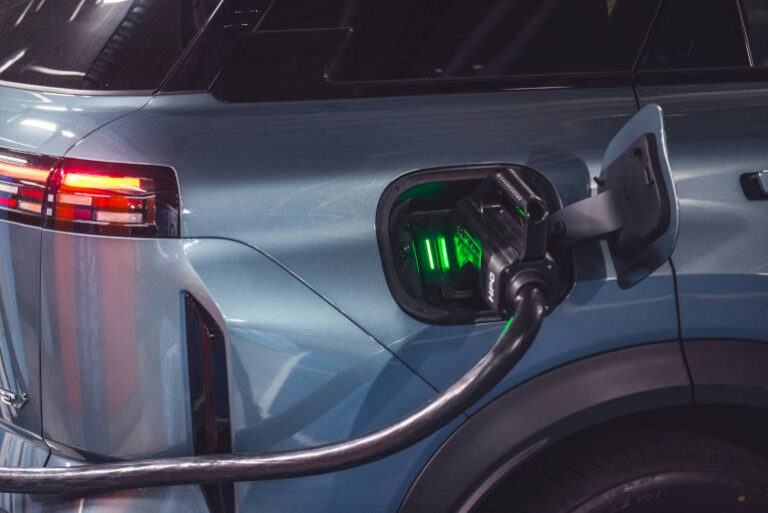
The NSW Government’s latest regional charging announcement has landed with strong backing from the Electric Vehicle Council (EVC), marking one of the most significant expansions of public EV infrastructure in the state’s history. For fleet operators, councils, and businesses planning low-emission transport strategies, the rollout offers a clearer, more predictable path for electric vehicle travel across regional NSW.
Backed by $5.9 million in Destination Charging Grants and a further $3.2 million in private co-investment, the plan will see 159 new chargers installed across 48 regional hotspots over the next 12 months. Locations include major tourism routes, supermarkets, national parks, visitor centres and high-demand holiday destinations.
A Confidence Boost for Drivers — and Regional Communities
EVC CEO Julie Delvecchio said the expansion directly tackles one of the biggest remaining barriers to electric vehicle uptake.
“This rollout of public chargers in NSW will support thousands of additional EV journeys each year, connect major tourism trails and regional communities, and help NSW meet its Net Zero goals,” Ms Delvecchio said.
She highlighted that while most EV drivers rely on a mix of home and public charging, the availability and visibility of public chargers often determines whether drivers feel comfortable making the switch — especially outside metropolitan areas.
“Public charging is also the single most effective way to eliminate range anxiety and give more drivers the confidence to take EVs on long-distance road trips.
“As EVs increasingly offer ranges over 400km, this rollout is an important step in opening up the whole state to EV travel. It builds on existing infrastructure and makes the switch easier for the next wave of drivers. Our message to families thinking of switching to an EV, or taking their EV on holidays: give it a go.”
The EVC also welcomed NSW’s decision to power the new chargers with 100% renewable energy, ensuring the shift to electric mobility translates directly into emissions reductions.
What It Means for Fleets
For Fleet Managers and organisations planning EV integration, the announcement delivers three key benefits:
1. More predictable long-distance routes
Regional EV mobility becomes more practical for field teams, service fleets, and government vehicles with regular travel through rural NSW.
2. Stronger support for depot-to-region use cases
With more mid-journey charging options, fleets can broaden the operational footprint of electric passenger vehicles and light commercial vans.
3. Reduced driver hesitancy
Workplace EV programs often face resistance from drivers worried about regional coverage. More public chargers help break down those concerns.
The EVC’s State of Electric Vehicles 2025 report identified a 20% increase in fast-charging locations nationally over the past year, with regional and tourism corridors emerging as high-growth areas driven by consumer demand. NSW’s announcement reinforces that momentum.
A Call for National Coordination
Ms Delvecchio said now is the moment for all states and territories to align behind a national strategy.
“Installing more public chargers in regional areas and along major tourism routes is key to how we build cleaner transport and a genuinely national charging network,” she said.
“Tourism operators are on board as they increasingly see charging as a way to attract year-round visitors. Every EV that stops to charge strengthens regional economies by bringing money into local businesses, including cafés, pubs and accommodation providers.”
The EVC is urging Federal and State Governments to progress:
- A national charging roadmap aligned with Net Zero and 2035 targets
- Continued co-investment to remove regional and highway blackspots
- Ultra-fast charging hubs for heavy vehicles and commercial fleets
- Integration of charging rollout into regional development and tourism planning
- Public information campaigns to counter EV misinformation
A Clear Signal for Fleet Transition
For Sustainability Managers and Finance Managers planning 2026 budgets, NSW’s regional charging expansion signals a maturing public charging network — reducing reliance on ICE vehicles for longer regional trips and widening the operational window for EV deployment.
With predictable public charging now connecting major routes and regional communities, the case for electrification becomes stronger across corporate fleets, councils, utilities, and service providers.
The next wave of EV adoption — especially across regional and decentralised fleets — will be shaped by infrastructure confidence. NSW’s 159-charger rollout delivers exactly that.